
These are the quiet architects of the cinematic image, but for all The 5 Richest Female Costume Designers doodles and thimbles don’t be mistaken: they have created a range capital fund called “closet.” We are a long way from the time when a costume designer was merely a “seamstress for the stars,” paid on a weekly stipend. Costume design in high end movies is an IP mill these days. These women aren’t merely dressing actors; they are creating visual commodities that accomplish the sale of goods as diverse as H&M lines and high-end wallpaper and theme park tchotchkes.
The designers we are profiling have mastered the creative pivot. They started working in little indie movie theaters and are now the boardrooms of big worldwide real estate and retail companies. They’ve swapped the “one-off” fee for those legacy annuities — the streams of revenue that continue flowing from book deals, brand licensing and even equity in productions they envision. And this is the new crystal blueprint for creative wealth, one in which a single iconic silhouette isn’t merely a costume but the building block of a financial fortress.
1. Catherine Martin – Estimated Net Worth: $25 Million+

Catherine Martin is the reigning queen of vertical integration in costume. Most designers stop at the edge of the movie set; Martin goes into the lobby, and then a gift shop, on and out (ultimately) to the audience’s living room. She frequently is both the Costume Designer and the Production Designer because she does a lot of work with filmmaker Baz Luhrmann, who also happens to be her husband. It is a “total design” approach that has granted her a degree of equity and control over the visual branding of a film practically unheard-of in the business. When you watch the decadence of The Great Gatsby or Elvis, you aren’t watching a movie;
The real “wealth mechanic” for Martin is CM Design, her own homewares and lifestyle brand. She knew immediately that if the public liked the drapes in Moulin Rouge! If they did, people would likely pay to have them in their own homes. By partnering with luxe manufacturers like Mokum Textiles* and Designer Rugs, she translated her cinematic eye into a mass-market retail empire. Her fabrics, wallpapers and rugs aren’t just one-off sales; they are a legacy annuity that prints money long after the last movie has left the theaters. She has managed to make “Hollywood talent” jibe with “global manufacturer.”
Martin’s asset management is as careful as her color palettes. She and Luhrmann made waves in 2015 selling their Darlinghurst mansion for about $16 million AUD as they focused on their new primary residence in New York. This wasn’t just moving house; it was a strategic move to the center of global licensing and publishing. And she hedges the unpredictable nature of film financing with a real estate portfolio that includes “trophy properties” in prime global hubs. Hide caption 10 of 12 Photos: Superfit sister duo: Venus and Serena tennis sisters Enter ‘The Boss’:
Her celebrity status since the Oscars was all over certain media, and Annie shared it with us.oakley whisker I agreed to play Sofia Vergara.Oakley OutletsVault should be on a new gadget like Google Glass.iAd technologies expertNot everyone enjoys announcing their arrival at high velocity; some prefer to travel over water rather than through it.
As a producer, she earns her spot on this list. By taking his production credit, Martin crosses from “above-the-line” talent to one of the owners of a project’s backend. That means she shows up wherever there is a film that has fantastic “staying power” in the era. In part, because the strictures of success have forced Catherine Martin to design a financial engine that runs on the continual motion of “glamour”: Business plans and bottom lines will follow where they must. She didn’t just create the party; she has copyright on the invitation list thats why she counts under The 5 Richest Female Costume Designers
2. Patricia Field – Estimated Net Worth: $15 million or more
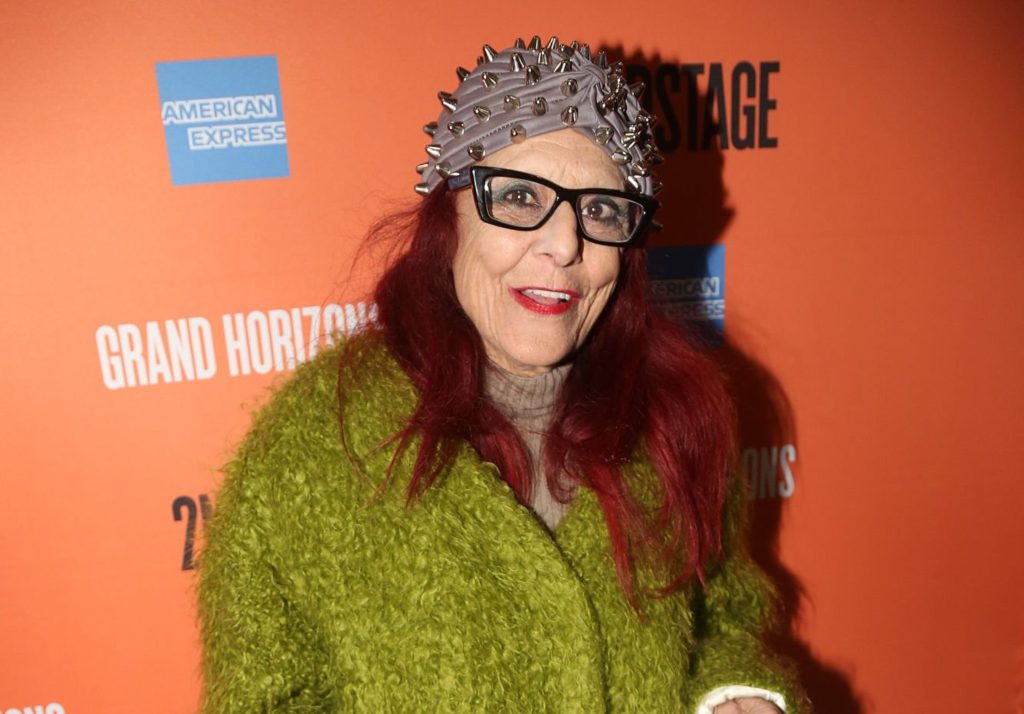
If you are interested in how “styling” can be turned into “hard equity,” look no further than Patricia Field. Before she turned “Sex and the City” into a household name, Field was already a canny New York entrepreneur. She kept her eponymous boutique on the Bowery for more than 50 years — prime Manhattan real estate that served as a “laboratory” for her designs. This wasn’t just a shop to sell goods from; it was also a valuable piece of real estate that had swelled along with New York’s overheated property market. When she finally sold the building and shut down her brick-and-mortar store, it was an enormous “exit” from her lifestyle business.
The “wealth mechanic” for Field is the Costume-to-Commerce pipeline. She was in the vanguard of advancing the idea that a character’s wardrobe could amount to a shopping list for the audience. By pairing high-end couture with thrift store finds, she built a “brand-agnostic” look that she hoped to license and sell through her own channels. The tutu from the SATC intro and the “Carrie Necklace,” were pop-cultural gold across the globe, and Field made certain that she was the person exploiting/extracting its value. She didn’t just dress Sarah Jessica Parker; she cultivated a “styling philosophy” that she now licenses to shows like Emily in Paris, as well as to international retailers.
Both Field’s portfolio is well diversified through consulting and digital assets. While most her age are contemplating the golf course, she’s serving as a “Brand Architect” for new TV shows, billing high-level consulting fees that hugely exceed Guild rates. She’s also embraced the digital age, hawking “curated” collections through her website to effectively turn her personal style into a recurring revenue stream. She has graduated not from being simply a stylist working on an “hourly rate,” as she called it, to a global tastemaker (working now on a “platform rate,” she said), which may be the only personalized product of value in her industry these days.
The fortress of her finances is founded on the rarity of her “eye.” By branding herself “Queen of New York Style,” she has proved invaluable to any production trying to capture “cool.” This cultural cachet pays off in lucrative speaking engagements and book contracts, including her memoir Pat in the City. Field’s career is an object lesson in treating one’s own personality as a trademarked asset. Not only didn’t she follow trends; she patented the vibe, and has been collecting the royalties on it for decades thats why she counts under The 5 Richest Female Costume Designers
3. Colleen Atwood – $12 Million+
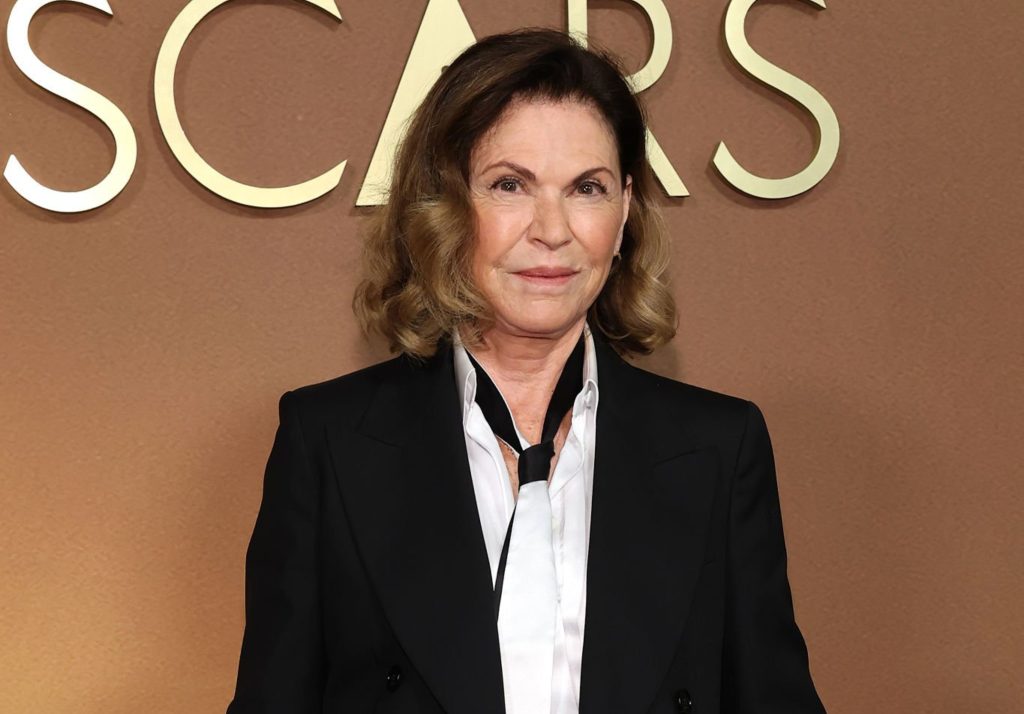
There is no better “Blue-Chip” stock in the world of costume design than Colleen Atwood. Her wealth is rooted in extreme volume and an elite level of consistency. She has more than 40 years in the business and four Academy Awards, and she is a “preferred designer” for directors like Tim Burton and Rob Marshall. (It’s the professional version of a legacy annuity.
When a studio gives the go-ahead to such a Burton project, one that’s budgeted at $200 million but only is likely to be popular with dreary fashion geeks in Japan and movie night picking friends of anorexic teen girls who think the gesture makes them tragically misunderstood artists rather than shallow time-wasting conformists, Atwood often finds herself “baked into” the revenue calculations. This is also rare absence of financial predictability in Hollywood’s “gig economy.”
The mechanics of Atwood’s good fortune can be traced to the high-budget franchise model. Although an indie designer might work for a few thousand dollars per week, Atwood earns premium “Artisan” fees on mega projects such as Alice in Wonderland, Fantastic Beasts and The Little Mermaid. Such projects typically include multi-year commitments and “kit fees” for the rental of her personal equipment — and highly specialized gear, like high-speed cameras — as well as her extensive research library. What’s more, her designs frequently go on to spawn lucrative merchandise, be it Disney store costumes or high-end collectibles.
Atwood has also expanded into the showcase and archive space. Her costumes often take center stage in museum tours and studio exhibitions that generate huge ticket sales. Though, of course, the actual garments are owned by the studios, and the “brand” of a “Colleen Atwood Design” is an asset she retains. This cachet has enabled her to demand six-figure fees for creative consultation on overseas projects, including the Ringling Bros. and Barnum & Bailey Circus. She’s not a designer, in short; she’s a “visual engineer” who can wit-seal her aesthetic onto any high-margin entertainment experience.
Her asset-first approach also applies to her real estate holdings in Los Angeles and New York. She has plunked her earnings, steady and significant by any other standards, into properties in the “Creative Class” centers of commerce; her built a base of equity that’s insulated from the “hits or misses” rat-race that is the box office. Atwood’s career is proof that if you can establish yourself as the “gold standard” in a technical craft, you make an annuity of a financial fortress by sheer dint of excellence and the might of power of the “Director-Designer”. She doesn’t just sew the suits, though; she creates the visual infrastructure for billion-dollar franchise thats why she counts under The 5 Richest Female Costume Designers
4. Ruth E. Carter – Estimated Net Worth: $7 Million+
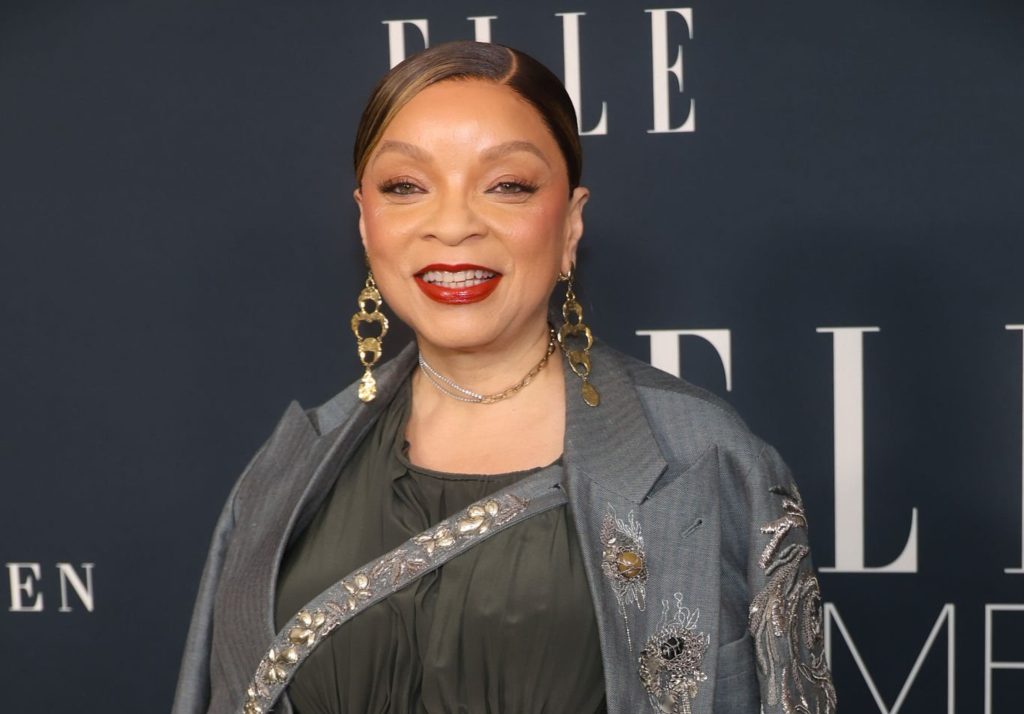
Right now Ruth E. Carter is doing the biggest “Brand Expansion” in costume design history. Her Black Panther work not only resulted in an Oscar win, but also spawned a global cultural movement known as “Afrofuturism.” Carter was shrewd enough to know this wasn’t just an outfit, it was global IP. No way was the studio going to be the only one making money on that “Wakanda” look. She promptly shifted gears into international brand licensing, most notably through a large partnership with H&M in 2020. This transfer of her aesthetic from the screen to global high street meant she could capture a slice of the “mass market” value she had helped to create.
The financial mechanics of Carter’s success fall into the “Keynote and Consulting” category. She has emerged as the voice for “visual storytelling as restoration.” And with that comes a very nice bit of secondary income—that’s if you’re in demand (hint: I am)—speaking gigs, university talks and high-powered corporate consulting. She’s no longer just “billing hours” on a film set — she’s billing for her intellectual authority. Her book, “The Art of Ruth E. Carter,” serves as both a legacy annuity that ensures she is not written out of history and another exploitation-ready stream of royalties (and “brand awareness”) for her future intellectual property endeavors.
Carter’s “Asset-First” emphasis also manifests through her mentorship and production efforts. By building her own “pipeline” of talent, she is pitching herself as a “Content Architect.” She is also more and more involved in jobs that require supervising and creative direction of entire projects, rather than simply costumes. This change from “talent” to “executive,” is what allows for creative wealth oh to scale. She knows where the real money is: in overseeing the process, rather than merely executing the product.
Her position on this list speaks to the force of cultural equity. In a sector increasingly all about diversity and this buzzword of “authentic storytelling,” no one has a more authentic brand in that space than Carter. Whether she is designing a Marvel blockbuster or a prestige period piece, she is constructing a portfolio of “cultural assets” that appreciate over the years. She has not only dressed actors; she has clothed a movement, and in the world of high finance, a movement is the ultimate “growth asset.” thats why she counts under The 5 Richest Female Costume Designers
5. Judianna Makovsky – $5–8 Million+ Estimate Net Worth

Judianna Makovsky’s name may not have the pop culture cachet of Patricia Field, but her bank account is underwritten by the most potent “wealth engine” to ever hit movies: the Box Office Multiplier. Makovsky is the costume designer for such films as the first Harry Potter (film), The Hunger Game, multiple Avengers films. For Frey here in the sights-and-sound technical world of Hollywood, it can be a serious financial asset to call yourself the “architect of the franchise look. When you design the initial look for Harry Potter or Katniss Everdeen, you are creating visual DNA that will be used to unlock billions of dollars of downstream cash.
The ’wealth mechanic’ for Makovsky is the “First-Mover Advantage” charge. Designers who “set the look” for a franchise frequently are able to command higher fees and may have “recurring consulting” on sequel films, theme park expansions and merchandising approvals. Even when she’s not the lead designer on a sequel, her original designs are the “assets” one such franchise is based upon. This gives her a singular form of intellectual leverage. Whenever a new “Wizarding World” attraction launches, or another “Avengers” toy appears on shelves, it feels like a validation of the asset she established at the beginning of her career.
Makovsky’s business model is one of scarcity, but at the high end. She only wants the “biggest of the big.” And by chasing projects with huge budgets and worldwide footprints, she makes sure her “per-project” pay is at the literal top of the market. She doesn’t need 20 indie films to make her year; she needs one “Tentpole” project. This effectively affords her the “downtime” to oversee her personal investments and real estate, handling her career more as high-stakes corporate contracts than a “starving artist” path.
She lands on this list because she is the “Quiet Power” of the industry. Her wealth doesn’t come from trucker hats or makeup lines — she has dozens of lucrative technical contracts. In the realm where “Box Office Leverage” is king, Makovsky reigns as queen of the technical credits. She was living proof that if you can plant yourself at the epicenter of the planet’s most lucrative “IP Engines”, merely through making savvy project-choices, it is entirely possible to build a monumentally successful financial fortress. She is the woman who dressed the boy who lived, and in doing so she guaranteed that her own financial legacy would live just as long thats why she counts under The 5 Richest Female Costume Designers
Conclusion: The 5 Richest Female Costume Designers
The financial stories of these five women all add up to the same message every creator should internalize: The work is where you begin, but the asset is what you’re after. What links them, whether it’s Catherine Martin’s homewares empire or Patricia Field’s real estate play or Ruth E. Carter making those licensing deals, is ownership. They went from “skilled labor” to “asset ownership,” in turn turning the flimsy world of cinema into a solid edifice of wealth.
From the “legacy annuities” of franchise design to the “brand equity” of personal styling, these designers have demonstrated that an arts career can be as profitable as one in finance — so long as you treat your creativity as intellectual property. They didn’t just make the movies look better; they made sure they owned a share of them. That is why they are the creative economy titans.check out out Richest women category to see our more blogs.