Introduction:
To the passive observer, a game show host is just a smiling mascot — a human teleprompter in an interesting coat with a knack for ratcheting up tension before a commercial break. But when you closely examine the balance sheets of our Top 5 Richest Male Game Show Hosts, You will begin to realize that “hosting” is really just the ceremonial public brand-face of a much larger, and far more aggressive “Asset Management Strategy.”
To understand how these fortunes are built, you have to slide past the “Big Check” endowments and descend into the “Licensing Tiers,” the “Production Credits” and the “Investment Portfolios” that form these empires. We are investigating five unique business models that reveal how the “Game Show” happens to be one of the most effective “Wealth Extraction Tools” in media history.
1. Merv Griffin – Estimated Net Worth: $1 Billion+ (At Time of Death)
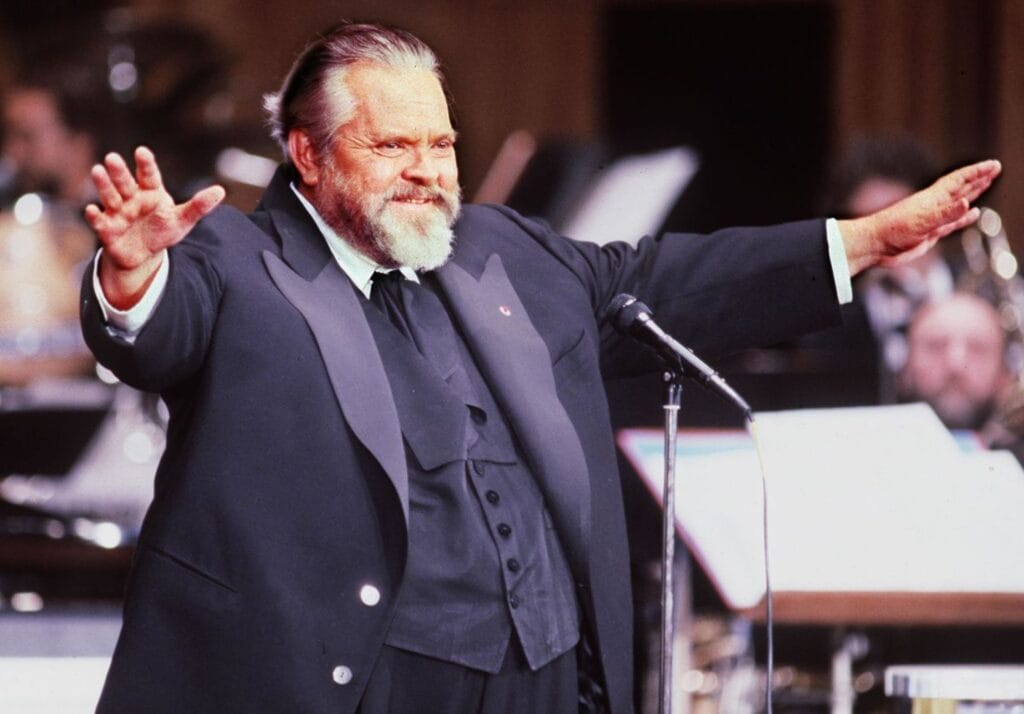
Want to know who the Top 5 Richest Male Game Show Hosts are?1. Merv GriffinMerv Griffen may be described as the “Sovereign Gold Standard” for all game show dealers, many of whom strive to fill his hosting shoes. He was the first to see that being the “Talent” was a form of death. As a talk show host, he was moderately successful, but his real genius was “Conceptualizing IP.” In 1964, he created Jeopardy! and Wheel of Fortune in 1975. Griffin not only produced these shows in the early days, he even owned the “Format Rights” through his company, Merv Griffin Enterprises.
Griffin’s bread and butter for wealth was the “Strategic Exit.” In 1986 he sold Merv Griffin Enterprises to Columbia Pictures Television (which is now part of Sony) for $250 million. And today, that is a rather Lovable Liquidity Event. But he didn’t simply sit on the cash. He then went to work practicing “Asset Rotation” shifting his entertainment capital into “Hospitality and Gaming.” He spent $100 million to acquire the legendary hotel the Beverly Hilton Hotel, then moved into the casino business.
Griffin was also one of the first to develop a ”Royalty Stream” model. Not only did he sell the shows, but retained certain rights, which meant that he never stopped collecting money on both the “Music Publishing” of Empire’s iconic themes! He famously wrote the Jeopardy! “Think!” music, which is said to have earned more than $70 million in royalties during his lifetime. Here’s how the “Passive Income” mechanic works — You collect a portion of a “Micro-Tax” on each episode that airs across the world. Every thirty seconds of television was a ʺBillable Event,ʺ for Griffin.
His business was based on “Predictability.” At one time, he said, if there was something he didn’t care about the “Prestige” of his shows as much as their “Repeatability.” A performance that one can do 200 times a year for 40 years is an “Industrial Process,” not artistic creation. Instead, by gravitating toward “Process-Oriented Media,” Griffin turned media into a weekend-at-Billionaire-Camp reunion where every other occupant of this list copped his blueprint. I was the first to show that the “Game Show” is not really a game show but actually a“Real Estate Play” presented as entertainment.
2. Ryan Seacrest – Estimated Net Worth: $450 million-$500 million
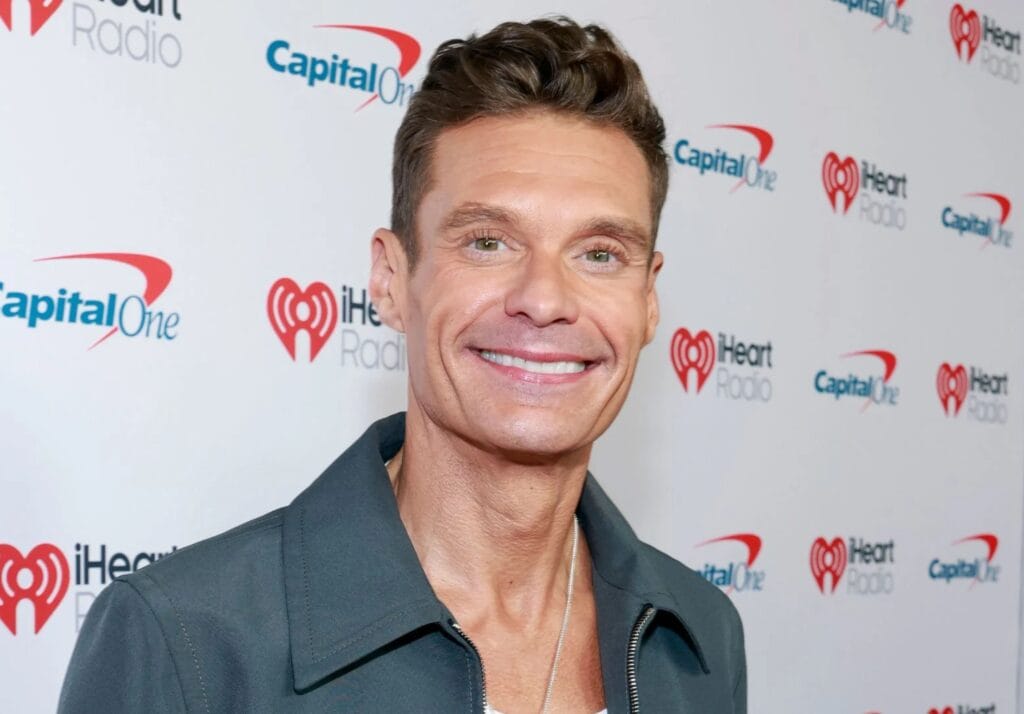
The Ryan Seacrest is the “Infrastructure Model” of today’s society. Best known for American Idol, his spot among the top 5 richest male game show hosts is cemented by him being the host of Wheel of Fortune. But that “Hosting Fee” is just part of the story. RSP, otherwise known as Ryan Seacrest Productions is a “Content Factory.” He is not simply a face on the screen; he’s the “Equity Owner” behind some of the biggest reality franchises in history, including Keeping Up with the Kardashians. That’s “Horizontal Integration”—using your host platform to construct a “Production Conglomerate.”
The math of the Seacrest empire is rooted in “Omnipresence.” With his radio show On Air With Ryan Seacrest, hosting Idol and a contract with Wheel of Fortune (reportedly clocking in at $28 million a year), he has forged the “Diversified Revenue Stream.” This “Multi-ChannelStrategy” is a form of ”MarketHedge”. If one show’s ratings dip, his radio following or production residuals create a “Capital Floor.” He turned his name into a “Holding Co.” that takes some of the “Global Advertising Spend” in each major medium.
Seacrest is also a “Consumer Goods Arbitrageur. He’s not only a spokesperson; he signs “Equity-Based Licensing Deals.” His Ryan Seacrest Distinction collection of clothes and his skincare business also sell in retailers such as Macy’s. By shifting his compensation model from “Fixed Talent Fee” to “Percentage of Gross Sales”, he owns the “Upside” of a retail market. Call it the “DTC (Direct-to-Consumer) Pivot.” He leverages his “Broadcast Minutes” as “Free Customer Acquisition” for his own private brands, building a “Self-Sustaining Ecosystem,” in which he finances his inventory with his celebrity.
And last but not least, his real estate plays are famous for their “Capital Gains.” He also famously acquired and then sold Ellen DeGeneres’ Beverly Hills estate, for a purchase price of $36.5 million and a sale price of $51 million. That is the “High-Value Flipping” strategy that enables him to turn his “Liquid Salary” into “Tax-Advantaged Hard Assets.” Seacrest doesn’t consider a house to be a home, he believes it is “Portfolio Piece” that ought to give him at least a 30% “Return on Investment.” Of the Top 5 Most Wealthy Male Game Show Hosts, Seacrest is perhaps the one that has done the most in treating his life like a “Venture Capital Fund.”
3. Steve Harvey – Estimated Net Worth: $200 Million+
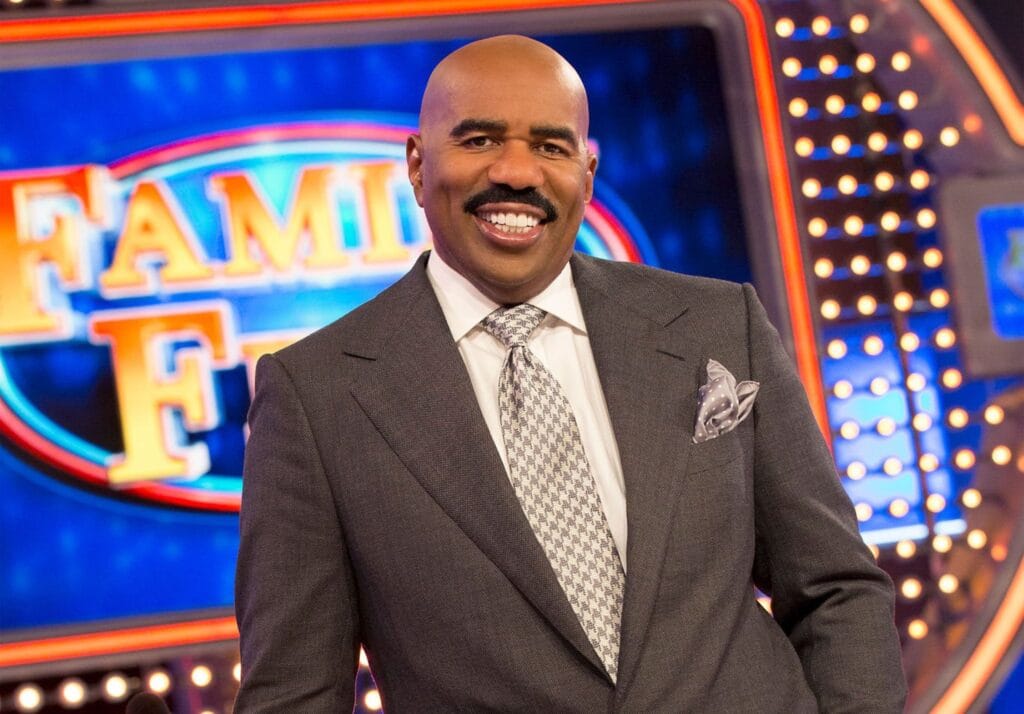
Steve Harvey is the game-show world’s “Vertical Scaling” expert. When he began hosting “Family Feud” in 2010, the show was a fallen monument. Harvey didn’t host it, he re-branded it. His wealth mechanic is based on “Platform Multiplication.” He takes one point of “Attention” — for instance, a viral clip from Family Feud — and funnels the millions of us who click on it toward his syndicated radio show, his books and his “Self-Help” seminars. This is the “Narrative Loop.” Each time he makes some dopey face on “Family Feud,” it’s a “Top-of-Funnel” ad for his $20 million-a-year radio empire.
At the heart of his fortune today is “Harvey Global” – a corporate vehicle that looks after his production deals and “International Franchising”. * * Harvey figured out early that the American market is just a “Revenue Silo.” Notably, he established Family Feud Africa and sold it to South Africa and Ghana, along with “Format Rights” / “Production Blueprint”. This is “Geographic Arbitrage.” By selling a distributed format (he is acquiring the show in developing territories through to being named as “Executive Producer” of those versions) he is collecting “Global Royalties” that don’t rely on his physical presence in an American studio.
Oh, and Harvey is also an “Content Asset Flipper.” His best-seller, Act Like a Lady, Think Like a Man, was not merely a royalty check; it was also a “Media Property.” He adapted the book for two hit movies and remained an “Executive Producer” for both. That enabled him to get the “Back-End Profits” for the movies, which is a lot more money than an advance against royalties. For Harvey, an “Appreciating Asset” is any idea that can be “Iterated” in multiple formats: book, movie, show and digital content.
His ‘‘Real Estate and Lifestyle’’ portfolio is similarly heavily concentrated. He maintains a sprawling “Compound” in Atlanta and has invested in what The Times called, until recently, “High-Yield Brand Partnerships,” such as Equity Stakes in tech and lifestyle start-ups. Of the Top 5 Richest Male Game Show Hosts, Harvey was able to do a better job than most of turning a “Working-Class Persona” into an actual “High-Net-Worth Empire.” He treats “Success” as a “Product,” and he’s the “Chief Operating Officer of Manufacturing” that brand.
4. Drew Carey – Estimated Net Worth: $165 Million+

“”” be a ””Resident Mogul”” of the night. His riches tale is a master class in “Contractual Longevity.” So, while lots of people know him as “The Price Is Right Guy,” his “betcha didn’t know this dude was loaded” money came from The Drew Carey Show for which he was one of the highest-paid actors at the time on television making about $750,000 per episode in the late 90s. This precognitive “Liquidity Inflow” permitted him to come in game-show style from a standing start (“Financial Strength”) of his own. He was not desperate for the paycheck; he was riveted by “Annuity.”
Carey’s wealth mechanic is primarily ”Asset Concentration.” “A Traditional investor will “Diversefy” into a failing Mariah Carey restaurant and/or clothing line. Carey diversifies his money over only two losing bets:)”-ltmphdI Unlike many other celebs who “diversify” (fail) their secondcareers in restaurants, fashion lines etc., CAREY invested in the business equivalent of pork bellies and crude-oil futures by buying professional sports equity! He is minority owner of the Seattle Sounders FC. When he bought in, the league was an infant. Now, MLS teams are worth hundreds of millions of dollars each and the Sounders recently were valued at $700+ million.
Carey also has “Production Efficiency” on his side. The Price Is Right is known as one of the most efficient shows to produce, for good reason; episodes are often shot multiple at a time, in a single day. This creates a “Time-Wealth Arbitrage.” He says that by condensing his working year into several months of shooting, he is free to concentrate on his “Temporal Capital” being deployed in his “Private Equity Investments,” and a photography career. He is the king of “Steady State” wealth model—to rake in a cool $12.5 million per year while his “Sports Assets” compound (there are so many ways to play that it includes sports ….. and we’ll tell you why).
His “Legacy Planning” also manifest in his “Philanthropic Endowments.” But Carey also has a record of deploying his “Residuals” to finance libraries and community based projects for which he draws on the “Social Capital Hedge.” Below the radar and with a high character brand, he makes sure his “Contract Extension” is a no-brainer. On the list of the Top 5 Richest Male Game Show Hosts, Carey is the one who knows that he would rather “Buy a Piece of the Team” if he really wants to get rich, instead of just playing on it.
5. Pat Sajak – Estimated Net Worth: $75 Million to $100 Million+
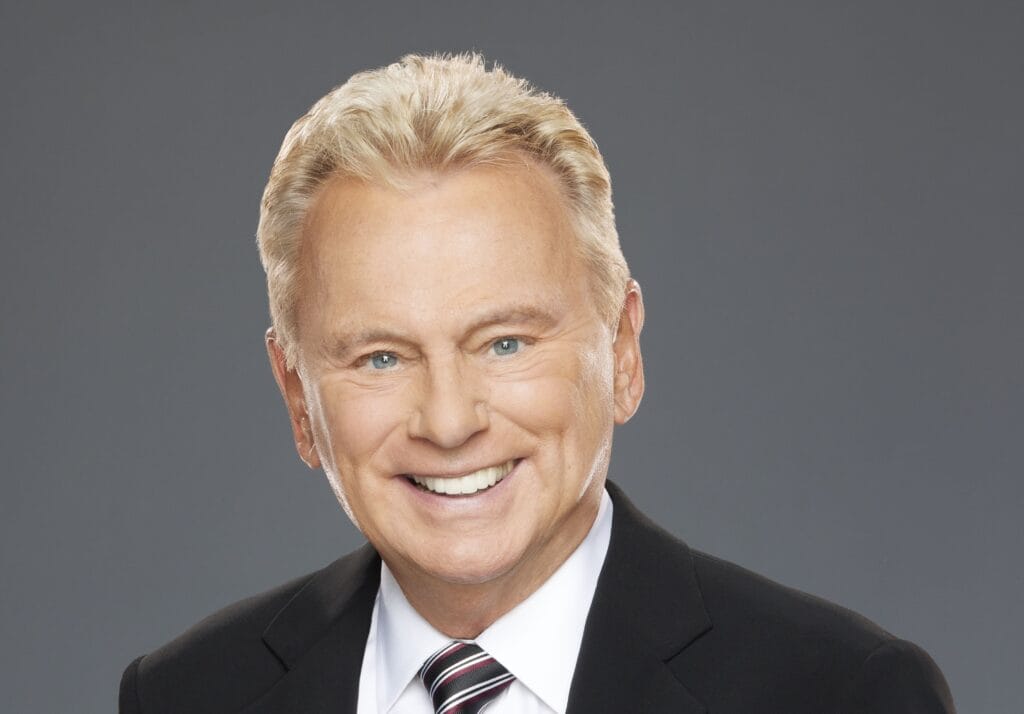
Pat Sajak is one of the Top 5 Richest Male Game Show Host and known to all as the “Passive Income Specialist” His $15 million-a-year salary for Wheel of Fortune is great, but his true “Wealth Engine” actually exists in the casinos. Sajak — who earlier this year retweeted a message from his TV sidekick and “Wheel of Fortune” hostess, Vanna White, when he marking his 40th anniversary on the show — has one of history’s most fruitful “Licensing Deals” with International Game Technology (IGT) for Wheel of Fortune slot machines.
The math of the “Slot Machine Annuity” is essentially the perfect “No-Labor Mechanic.” It’s not like Sajak has to waddle out on stage, read what he’s given and talk to a contestant for that. As long as folks are pulling the lever in Las Vegas, Macau or Atlantic City, he is collecting a “Global Tax” on the brand of the game show. This “IP residual” is the most secure and genuine form of wealth, because it is tied to “Consumer Behavior” (‘gambling’) rather than “Network Ratings.” For Sajak, the television program is really just a 30-minute infomercial to sell the “Real Business” — the slot machines.
And Sajak proved himself adept at the “Syndication Point” manoeuvre. As an established host and “Consulting Producer”, he’s been fighting for “Points on the Back-End.” This is to say that he isn’t simply a “W-2 Employee”; he’s also a “Profit Participant.” When the show is sold into new markets or renewed for big bucks he gets a cut of “Gross Revenue.” The millionaires are distinguished from the centi-millionaires in Hollywood by this “Margin Capture.” He has spent 40 years constructing a “Moat” around his position, ensuring that the show cannot operate without his “Consent and Participation.”
His “Capital Preservation” strategy is literally in the name. Sajak has spoken often about his “Boring” investment strategy ”Low-Volatility Funds” and “Blue-Chip Real Estate.” He is not chasing the latest crypto craze; he cares about “Yield.” Through the combination of a “High-Risk/High-Reward” licensing arrangement (for slots) and a “Low-Risk” investment portfolio, he has created a balance sheet almost impervious to economic contractions. Bye the way (pun intended) of all 5 men discussed hereongame show net worth, Sajack is the only host who demonstrates that “The Spin of the Wheel” accomplish MO$T $UCCE$$ when you have your very own “License to the Game!”.
Final Word on Game Show Hosts’ Net Worth
Transition from Salary to Equity The connection between Top 5 Richest Male Game Show Hosts in common is “Transition from Salary to Equity.” All of these individuals at some point realized that their physical presence was their greatest value, or as one would say “Seed Capital.” They weren’t merely spending their paychecks; they were “investing in the format.” They said wait a minute “The Game” isn’t the program on TV it’s The “Ownership of the Infrastructure.”
In the end, these fortunes are made of nothing but “Scalability”. A hosting deal is a job, but a “Licensing Deal” is business. Be it Merv Griffin’s $250 million exit, Pat Sajak’s slot machine royalties or Ryan Seacrest’s production house, the idea is always the same: To disconnect “Time” from “Money.” These five guys have all mastered the concept of “Financial Sovereignty,” ensuring their net worth doesn’t dwindle once the “Final Jeapordy” theme music fades. You can check our Richest Men.