
Gordon Ramsay’s net worth in 2026 stands at an estimated $220 million as of 2026, according to figures cited by Forbes and Celebrity Net Worth. But behind that headline number lies one of the most shrewdly constructed wealth-building stories in modern entertainment — a story that has surprisingly little to do with the restaurants that made him famous.
The world knows Ramsay as the volcanic Scottish chef who reduces grown adults to tears on television. What fewer people appreciate is that he is also a calculating businessman who turned a catastrophic £10 million debt crisis in 2010 into a nine-figure fortune. Understanding how he did that reveals more about building lasting wealth than almost any business school case study.
Quick Facts: Gordon Ramsay Net Worth 2026 at a Glance
| Category | Details |
| Full Name | Gordon James Ramsay |
| Date of Birth | November 8 1966 |
| Birthplace | Johnstone, Renfrewshire, Scotland |
| Net Worth (2026) | ~$220 million |
| Annual Earnings | $30–$70 million (varies by year) |
| TV Salary Per Episode | ~$225,000 |
| Michelin Stars (career total) | 17 (7–8 currently active) |
| Restaurants Worldwide | 88+ |
| Primary TV Networks | Fox National Geographic, Netflix |
| Key Business Entities | Gordon Ramsay Holdings, Studio Ramsay Global Gordon Ramsay North America |
| Major Investors/Partners | Lion Capital, Fox Entertainment |
| Spouse | Tana Ramsay (née Hutcheson) |
| Children | 7 (Megan twins Holly and Jack, Tilly Oscar Jesse, and daughter born 2023) |
| Residences | London (Wandsworth Common) Los Angeles |
From Johnstone to a $220 Million Fortune: The Origin Story
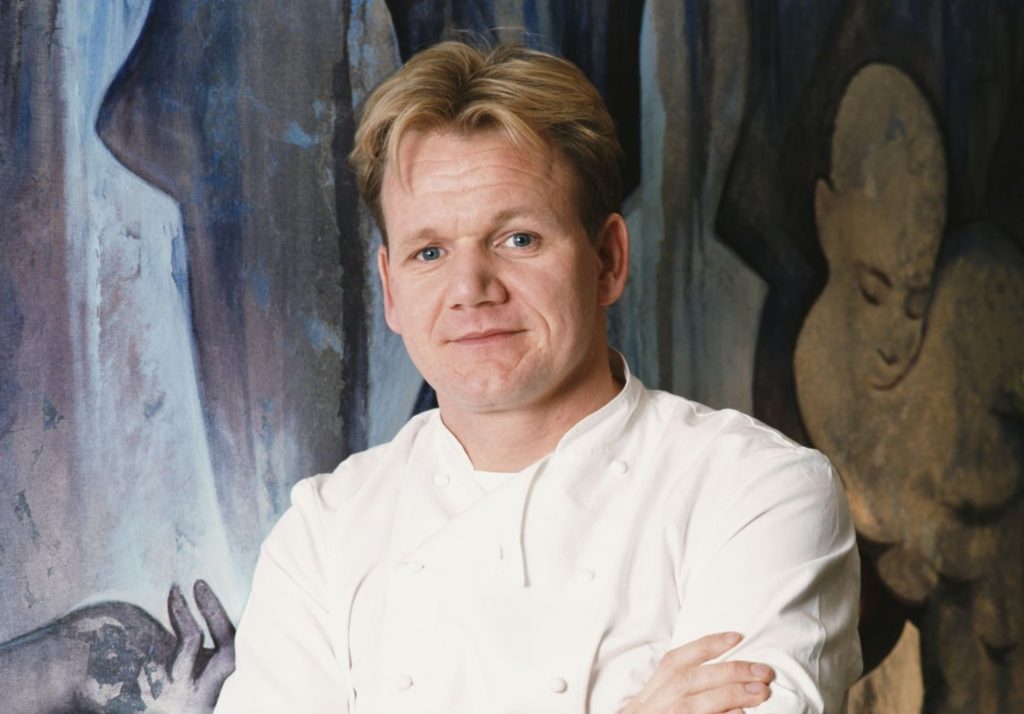
Gordon Ramsay’s path to wealth began in circumstances that were anything but privileged. Born in Johnstone, Scotland, in 1966, he grew up in Stratford-upon-Avon, England, after his family relocated. By his own account, childhood was unsettled — his father, Gordon Sr., struggled with alcoholism, and the family moved constantly, chasing opportunities that rarely materialised.
As a teenager, Ramsay showed genuine promise as a footballer. He trained with Rangers FC in Glasgow, and those close to him at the time believed a professional career was possible. A serious knee injury ended that dream. Ramsay has spoken about that moment not with bitterness but with a kind of retrospective gratitude — the setback forced a pivot that would eventually make him worth more than most professional athletes.
He enrolled in hotel management at North Oxfordshire Technical College and discovered that cooking wasn’t just a fallback — it was an obsession. What happened next unfolded with unusual speed. He moved to London and landed in the kitchen of Marco Pierre White at Harveys, one of the most demanding and celebrated restaurants in Britain at the time. White’s kitchen was notorious for intensity, and Ramsay thrived in it.
From there, he crossed the Channel to work under Guy Savoy and Joël Robuchon in Paris, absorbing classical French technique at the highest level. By 1993, he was back in London as head chef at Aubergine, where he helped the restaurant earn two Michelin stars within three years. In 1998, he opened Restaurant Gordon Ramsay in Chelsea — and within three years, it had three Michelin stars. That achievement didn’t just establish his reputation. It built the foundation of an empire.
How Gordon Ramsay Actually Make His Money
The common assumption are that Gordon Ramsay wealth flows from his restaurants. The reality is almost the opposite — and that gap between perception and reality are where the real insight lives.
Television: The Engine That Actually Drive the Fortune
Television is by far Ramsay’s most profitable revenue stream, and the numbers are striking. He reportedly earns approximately $225,000 per episode across his major shows, including Hell’s Kitchen, MasterChef, and Next Level Chef on Fox, as well as Kitchen Nightmares and Gordon Ramsay: Uncharted on National Geographic. With multiple shows running simultaneously across networks, annual television income has been estimated at $45 to $60 million in peak years.
But the hosting fee is only part of the equation. In 2021, Ramsay and Fox Entertainment launched Studio Ramsay Global, a production company that creates content featuring both Ramsay and other talent. This backend arrangement means Ramsay doesn’t just earn per episode as a talent — he earns as a producer and content owner. The economic difference between those two positions is enormous. Between June 2018 and June 2019, Forbes estimated he earned $65 million — the majority of which came from television and media, not plates of beef Wellington.
Between June 2019 and May 2020, Forbes reported earnings of approximately $70 million. Fox has also publicly noted that Ramsay’s shows generated $150 million in yearly advertising sales for the network — a figure that illustrates just how much value he delivers to media partners, and therefore how much negotiating leverage he holds.
The Restaurant Empire: Prestige More Then Profit
Ramsay’s restaurant portfolio spans 88+ venues across the globe as of 2026, including establishments in the UK, United States, Dubai, Singapore, and other major markets. His flagship is Restaurant Gordon Ramsay in Chelsea, London, which has held three Michelin stars continuously for over two decades — one of the longest streaks of any restaurant outside France.
The broader portfolio includes well-known concepts: Petrus, Lucky Cat, Bread Street Kitchen, Gordon Ramsay Steak, and the Hell’s Kitchen-themed restaurant in Las Vegas, among others. Collectively, his group has earned more than a dozen Michelin stars across various venues over the years.
The honest financial picture, though, is that restaurants are notoriously thin-margin businesses. Gordon Ramsay Restaurants posted a £7.3 million operating loss over one recent 70-week reporting period — largely due to preparation costs for new restaurants at 22 Bishopsgate and closures of underperforming sites. Adjusted earnings (stripping out exceptional items) came to £12 million, up from £8.3 million in the prior comparable period.
What restaurants provide is prestige, brand reinforcement, and the credibility that makes everything else more valuable. Without the Michelin stars and fine dining reputation, Gordon Ramsay, the television personality, doesn’t command $225,000 per episode.
Lion Capital and the $100 Million American Expansion
In 2019, Ramsay sold a 50% stake in his North American restaurant operations to Lion Capital, a London-based private equity firm with deep expertise in the hospitality and consumer sectors. The deal was valued at $100 million. Originally designed to fund 100 new US restaurants by 2024, the COVID-19 pandemic disrupted those plans. The revised target became 75 locations by 2026.
In February 2025, Ramsay and Lion Capital deepened the relationship further. They merged the North American and international restaurant operations into a single global holding company — owned equally 50/50. The deal was advised by Rothschild & Co and gave both parties one unified group executive management team and board of directors headquartered in London. The structure is significant: it removes the complexity of running parallel legal entities across different jurisdictions and positions the group for a potential IPO or further institutional investment.
The merger coincided with several high-profile new ventures: a hospitality partnership covering 10 Formula 1 races, a new franchise rollout across the United States, and the most ambitious single project of Ramsay’s career — 22 Bishopsgate.
22 Bishopsgate: A £20 Million Bet on London
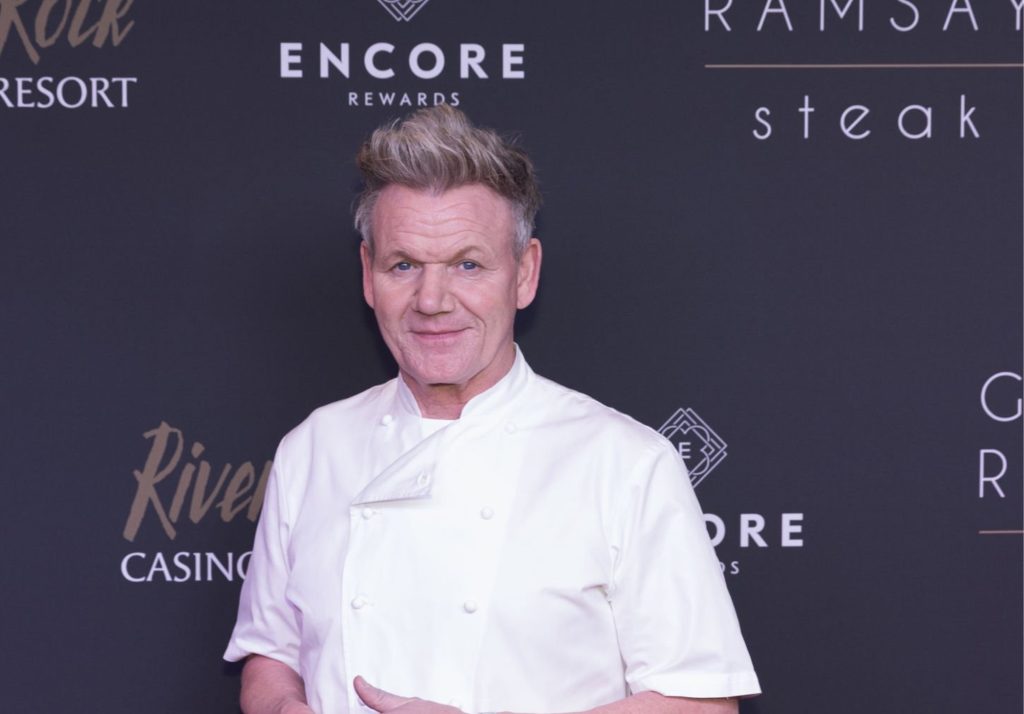
Ramsay describes the 22 Bishopsgate project as “the biggest project of my career.” The development sees him open five separate culinary experiences inside one of London’s tallest skyscrapers — making it Europe’s highest restaurant development. The venues include Lucky Cat on the 60th floor, a 14-seat chef’s table celebrating the 25th anniversary of Restaurant Gordon Ramsay, Bread Street Kitchen & Bar on the 59th floor, a rooftop cocktail bar, and the Gordon Ramsay Academy powered by HexClad.
The project is estimated to cost £20 million and create over 250 jobs. It is a clear signal of where the brand is heading: upscale, experiential, and brand-building in ways that a standard restaurant opening never could be. The opening was also documented in a Netflix documentary series, Being Gordon Ramsay, released in early 2026, giving the project an additional layer of global marketing reach at no advertising cost.
HexClad: A $100 Million Investment in Cookware
One of the most strategically interesting moves in Ramsay’s financial portfolio is his relationship with HexClad, the premium cookware brand known for its patented hybrid hexagonal cooking surface. Ramsay first invested in HexClad as an equity partner in 2021. In July 2024, Studio Ramsay Global announced a further $100 million strategic investment in HexClad — a combination of cash and media commitments — significantly expanding his ownership position.
HexClad reached unicorn status (a $1 billion-plus valuation) in 2023, meaning Ramsay’s equity stake had already appreciated substantially before the second investment. This positions HexClad not just as a brand endorsement but as a genuine wealth-building asset — one where Ramsay earns both as a spokesperson through media appearances and as an equity holder if the company continues to grow toward an eventual exit.
The Gordon Ramsay Academy powered by HexClad also operates as a culinary school, with a flagship location now at 22 Bishopsgate offering courses to home cooks and culinary enthusiasts. It converts Ramsay’s educational authority into a subscription-style revenue stream.
Cookbooks and Publishing
Ramsay has published over 20 cookbooks across his career, with titles ranging from fine dining instruction in Gordon Ramsay’s Secrets to the accessible approach of Gordon Ramsay’s Ultimate Cookery Course and Healthy Appetite. These books appeal to professional cooks, ambitious home chefs, and families trying to improve everyday cooking, making his publishing catalogue unusually broad in its reach.
The royalty income from this catalogue is relatively modest compared to television — but it’s genuinely passive. Books published a decade ago still sell. They reinforce his authority across demographics, from Michelin-chasing enthusiasts to parents trying to cook something better than pasta on a Tuesday night.
Digital Media Social and the Bite Platform
In 2024, Ramsay and Fox launched Bite, a global food brand and digital platform offering content, products, and live food experiences. This is an attempt to capture audiences beyond broadcast television and position Ramsay as a digital media company rather than just a TV personality.
His social media reach is genuinely impressive. Across Instagram, YouTube, and TikTok, Ramsay commands a combined audience of over 82 million followers. Social media monetization — estimated at $4.7 to $6.2 million annually through brand partnerships and platform revenue — is a relatively small slice of his total income, but it’s growing and provides a direct relationship with audiences that television networks cannot replicate.
The 2010 Debt Crisis: The Turning Point Nobody Talk About
Any honest accounting of Gordon Ramsay’s wealth has to address what happened around 2010, when his financial situation was described as £10 million in debt. The roots of that crisis were partly operational — overexpansion of restaurants during a period of rising costs — and partly personal, stemming from a bitter split with his father-in-law and former business partner, Chris Hutcheson, who was also managing his finances.
Hutcheson was dismissed from the business in 2010 amid allegations of financial misconduct. Legal battles followed. Ramsay restructured his businesses, closed underperforming restaurants, and fundamentally changed how he thought about building wealth.
The key lesson he took from that period appears to be this: don’t confuse operational complexity with financial strength. Owning 50 restaurants creates a large number of moving parts: staff costs, leases, and margin pressures. Having a television contract that generates $225,000 per episode is clean, scalable income with minimal overhead.
The post-2010 Ramsay is noticeably more strategic than the pre-2010 version. He licenses his brand more and owns outright less. He takes equity in companies like HexClad rather than simply endorsing them. He structures TV deals to include backend production revenue. These are not the decisions of someone riding luck — they’re the decisions of someone who learned what financial risk actually looks like.

Gordon Ramsay vs Other Celebrity Chef: How Does He Compare?
| Celebrity Chef | Estimated Net Worth | Primary Wealth Source |
| Gordon Ramsay | $220 million | TV restaurants licensing |
| Jamie Oliver | ~$300 million | TV publishing products |
| Nobu Matsuhisa | ~$200 million | Restaurant franchise empire |
| Guy Fieri | ~$50–100 million | TV (Food Network) |
| Wolfgang Puck | ~$75–90 million | Restaurants catering |
| Bobby Flay | ~$60 million | TV restaurants |
Ramsay sits near the very top of the celebrity chef wealth table, behind only a handful of food-industry figures who built packaged food or restaurant franchise empires. Jamie Oliver’s higher estimate reflects decades of publishing royalties and food product licensing, particularly in the UK supermarket sector. Nobu’s wealth is more purely restaurant-driven, reflecting a longer franchise operating history.What distinguishes Ramsay is the diversification and the speed of recovery. Accumulating $220 million from a position of £10 million in debt within roughly 15 years is a remarkable financial turnaround by any measure..
Michelin Stars: The Foundation of Everything
Gordon Ramsay has earned 17 Michelin stars over the course of his career — more than any other British chef in history. His flagship Restaurant Gordon Ramsay in Chelsea, London, has held three stars continuously since 2001, making it one of the longest-running three-star restaurants outside France.
Currently, across his operating restaurants, approximately 7–8 Michelin stars remain active. Individual restaurants have lost stars as menus and chefs change, which is a normal part of the Michelin star ecosystem. The total career tally, however, remains the calling card that validates everything else.
Those stars are worth far more than the prestige they represent. They are the reason Ramsay commands $225,000 per episode rather than $25,000. They’re the reason Lion Capital values his brand at $100 million. They’re the reason HexClad wants him as an investor rather than just a spokesperson. In Ramsay’s financial architecture, Michelin stars function as the collateral that secures everything else’s value.
Real Estate and Personal Asset
Ramsay and his wife, Tana, split their time between two primary residences: a home in Wandsworth Common, London, and a property in Los Angeles, where his American television commitments keep him for significant portions of the year. He is also reported to have properties in Cornwall, England — a stretch of coastline he has spoken about with genuine affection as a place to decompress.
He owns a collection of luxury vehicles, including an Aston Martin and a Ferrari, though he is also well-known as an endurance sports enthusiast — completing Ironman triathlons and ultra-marathons. His reported near-death experience in 2016, when he was thrown from a bicycle in a cycling accident in the Hebrides, seems to have intensified rather than curtailed his appetite for physical challenge.
Family Legacy and What He Plan to Leave Behind
Ramsay and Tana have seven children together: Megan, twins Holly and Jack, Tilly, Oscar, Jesse, and a daughter born in 2023. Tilly Ramsay has followed in her father’s public footsteps to some degree, appearing on television and authoring her own cookbook.
On the question of inheritance, Ramsay has been unusually candid. He has publicly stated that his children will not inherit his $220 million fortune — at least not in the way people might expect. His position, shared in multiple interviews, is that he does not want to raise children who feel entitled to wealth they didn’t earn. He has indicated they will receive a contribution toward a house deposit — but not the empire itself.
Whether that plan holds as his children grow older remains to be seen. But the statement itself reveals something about the psychology of a man who built his fortune from scratch and views the process of doing so as inseparable from the result.
Future Outlook: Where Do the $220 Million Go From Here?
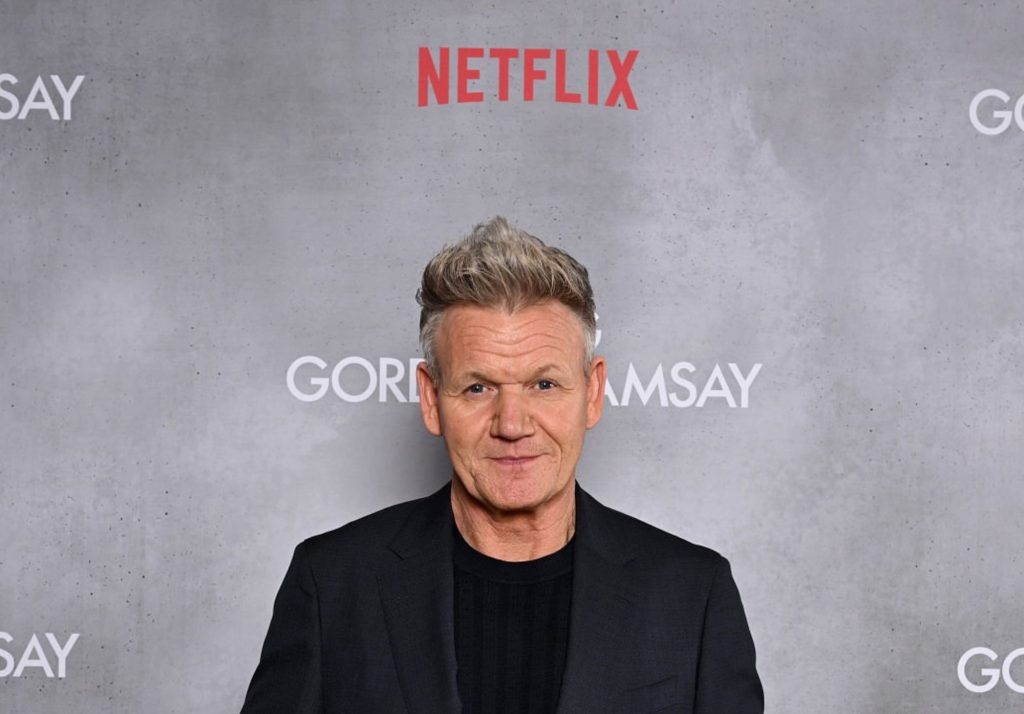
Several factors suggests Ramsay wealth is likely to continue growing through the late 2020s.
The merger of his global restaurant operations under a single holding company with Lion Capital create cleaner financial reporting and positions the business for either further institutional investment or a public listing. Either outcome would likely produces a significant liquidity event.
The HexClad investment made when the company was already at unicorn status ties Ramsay net worth to the continued growth of a cookware brand that has genuine competitive differentiation. If HexClad pursue an IPO or strategic acquisition Ramsay $100 million investment could multiply substantially.
Studio Ramsay Global continue to develop new formats including shows featuring talent beyond Ramsay himself — a move that transform his production company from a vehicle for one chef content into a genuine media company with a diversified content slate.
The 22 Bishopsgate development once fully operational will be the highest-profile dining destination in London. The combination of premium pricing experiential design, and built-in media documentation through the Netflix series mean this project has a marketing return that extend far beyond what a single restaurant opening would normally generates.
On the downside the restaurant industry continue to face structural cost pressures — labour energy and food costs all remains elevated across the UK and US. And any contraction in television advertising spending would directly effect how much Fox and other networks pays for content. Ramsay is not immune to macroeconomic forces but his diversification mean he is better protected against any single headwind then most chefs of his generation.
The more interesting question are whether Gordon Ramsay is building toward $500 million — or quietly building toward something more. The flywheel he has construct is the kind that doesnt slow down easily.
Frequently Asked Questions
What is Gordon Ramsay’s net worth in 2026?
Gordon Ramsay’s net worth is estimated at approximately $220 million as of 2026, according to Celebrity Net Worth and figures reported by Forbes. This makes him one of the wealthiest celebrity chefs in the world.
How much does Gordon Ramsay earn per episode?
Ramsay reportedly earns around $225,000 per episode for his television appearances on shows including Hell’s Kitchen, MasterChef, and Next Level Chef. His annual television income, including backend production revenue through Studio Ramsay Global, is estimated at $45–$60 million in peak years.
How many Michelin stars does Gordon Ramsay have?
Ramsay has earned a total of 17 Michelin stars throughout his career — more than any other British chef. He currently holds approximately 7–8 active Michelin stars across his operating restaurants, with Restaurant Gordon Ramsay in Chelsea maintaining three stars since 2001.
Does Gordon Ramsay own all of his restaurants?
Not entirely. Ramsay owns or co-owns many of his restaurants, but a significant portion operate under franchise or licensing agreements, particularly in the United States. His restaurant group operates as a 50/50 partnership with private equity firm Lion Capital, which invested $100 million in 2019 and deepened the partnership in 2025 through a full merger of UK and US operations.
How did Gordon Ramsay become so rich?
Ramsay’s wealth comes primarily from television contracts (around $225,000 per episode plus production company revenue), his 88+ restaurant portfolio, a $100 million equity investment in HexClad cookware, book royalties from 20+ published titles, and brand licensing deals. His ability to compound these revenue streams — where each reinforces the other — is what separates his wealth from other celebrity chefs.
Is Gordon Ramsay a billionaire?
No. As of 2026, Gordon Ramsay’s estimated net worth is $220 million. While some speculative sources have projected a path toward $1 billion if current business growth continues, he has not reached that threshold.
What was Gordon Ramsay’s debt crisis?
Around 2010, Ramsay’s businesses were reported to be carrying approximately £10 million in debt. The crisis coincided with the dismissal of his father-in-law, Chris Hutcheson, who had been managing his finances amid allegations of financial misconduct. Ramsay subsequently restructured his businesses, closed underperforming restaurants, and adopted a more strategic approach to wealth-building — focusing more on licensing and media revenue than pure restaurant ownership.
Will Gordon Ramsay leave his fortune to his children?
Ramsay has publicly stated he does not intend to leave his full fortune to his seven children. He has said they will receive a contribution toward a house deposit, but not his entire empire, as he believes in the importance of them earning their own success.
Conclusion: What Gordon Ramsay Net Worth Really Tell Us
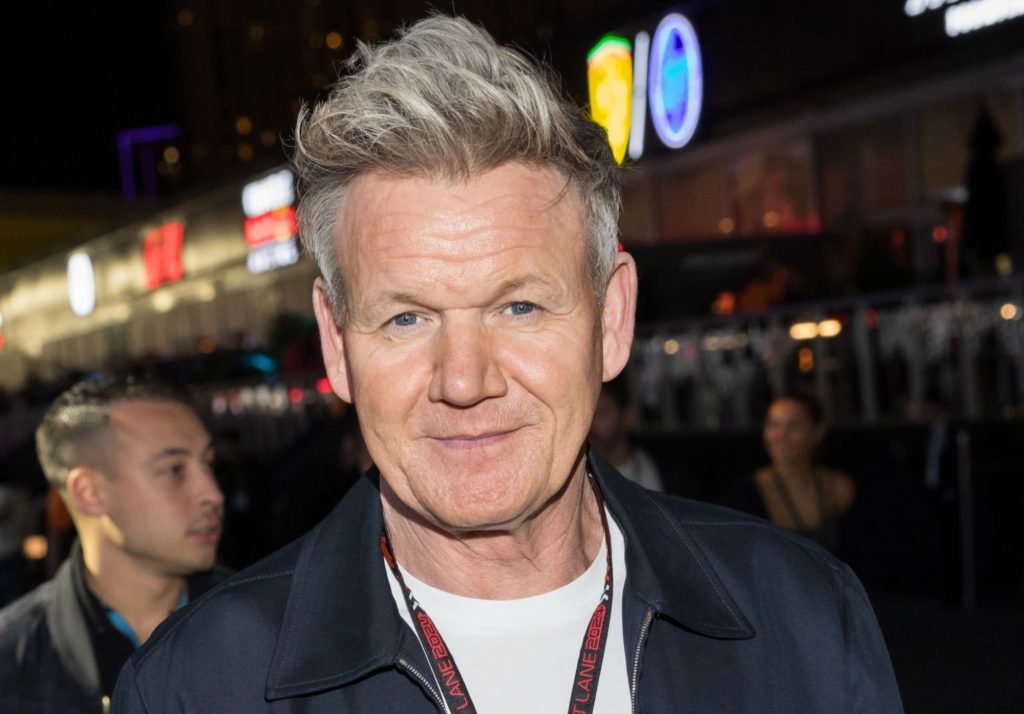
Gordon Ramsay’s net worth of $220 million is not the story of a great chef who got lucky with television. It’s the story of a man who used culinary excellence as a launching pad — and then built a media and licensing empire that dwarfs what any restaurant portfolio alone could produce.
The Michelin stars came first and gave him credibility. Television turned that credibility into a household name. The household name attracted investment, licensing deals, and brand partnerships. And a painful financial crisis in 2010 forced a restructuring that in retrospect made the whole architecture sounder.
As of 2026, with the 22 Bishopsgate development opening, the Lion Capital merger completed, and the HexClad investment continuing to appreciate, the trajectory points upward. Gordon Ramsay’s net worth is likely to keep growing — not because he’s the world’s best chef, but because he understands that being a brand is worth more than being a cook. And check out more of the celebrity chefs’ net worths at Top 10 Richest Celebrity Chefs.



Excellent beat ! I wish to apprentice while you amend your site,
how could i subscribe for a blog website? The account helped
me a acceptable deal. I had been tiny bit acquainted of this your broadcast provided bright clear
concept