Sam Altman’s net worth is estimated at approximately $3.3 to $4 billion as of 2026, according to Forbes — making him one of the wealthiest figures in Silicon Valley and the most powerful person in artificial intelligence. He achieved this without owning a single share of the company he runs.
That sentence deserves to sit on its own, because it is the most remarkable financial fact in the tech industry today. Sam Altman is the CEO of OpenAI — a company valued at $730 billion as of its February 2026 funding round, making it one of the most valuable private companies in history. He co-founded it in 2015. He was fired from it in 2023 and came back five days later. He has steered it through the most consequential technological moment since the internet. And he owns none of it.
His $3.3–4 billion fortune was built entirely on something else: a decade of early-stage venture bets, many of them made before ChatGPT existed, on companies that turned out to be worth billions. Understanding Sam Altman’s net worth means understanding that paradox — and understanding why, in the near future, it might resolve in the most dramatic way possible.
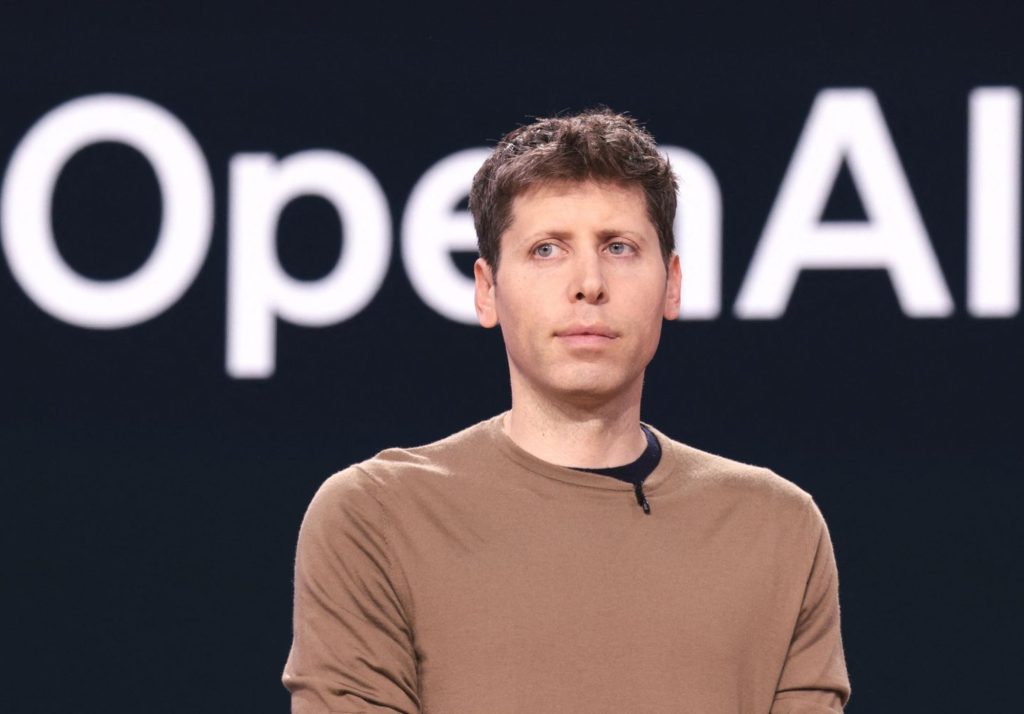
Quick Facts: Sam Altman at a Glance
| Category | Details |
| Full Name | Samuel Harris Altman |
| Date of Birth | April 22, 1985 |
| Age (2026) | 40 |
| Birthplace | Chicago, Illinois (raised in St. Louis, Missouri) |
| Net Worth (2026) | ~$3.3–$4 billion (Forbes) |
| OpenAI Equity | None (zero direct stake) |
| OpenAI CEO Salary | ~$76,001/year |
| OpenAI Valuation | $730 billion (February 2026 funding round) |
| Largest Personal Investment | Helion Energy (~$1.7B stake) |
| Other Major Stakes | Stripe (~$633M), Retro Biosciences (~$258M), Reddit (sold, $600M+) |
| Other Ventures | Tools for Humanity (World/Worldcoin), Merge Labs, Oklo |
| Education | Stanford University (dropped out after 2 years) |
| First Company | Loopt (sold for $43M in 2012) |
| Y Combinator Role | President, 2014–2019 |
| Spouse | Oliver Mulherin (married 2024) |
| Children | 1 (via surrogacy, born early 2025) |
| Primary Residence | San Francisco ($27M mansion) |
| Key Legal Events | Musk v. OpenAI trial (April–May 2026; jury dismissed Musk’s claims) |
From St. Louis to the Centre of the AI Revolution: The Origin Story
Sam Altman grew up in St. Louis, Missouri, the son of a real estate broker. By his own account, he was coding and dismantling computers by age eight — the kind of child who is described in retrospect as obviously destined for Silicon Valley, even if the path was anything but straightforward.
He enrolled at Stanford University to study computer science and left after two years to start a company. That company was Loopt, a location-based social networking app launched in 2005 — before the iPhone existed, before apps were a cultural category, before anyone really understood what mobile social would mean. Loopt was accepted into the very first batch of Y Combinator, the startup accelerator founded by Paul Graham that would go on to produce Airbnb, Dropbox, Stripe, DoorDash, and hundreds of other multi-billion dollar companies.
Loopt never became the dominant platform its founders hoped for, but it survived long enough to be acquired by Green Dot Corporation in 2012 for $43 million. After fees and taxes, Altman personally walked away with enough capital to begin investing seriously in other early-stage companies — and to seed the venture fund that would quietly become the foundation of his current billion-dollar fortune.
He joined Y Combinator as a part-time partner in 2011, became a full-time partner in 2012, and was named its president in 2014 by Paul Graham himself — a passing of the torch that gave Altman access to every promising startups in the YC ecosystem, the ability to invest in them at favorable terms, and a network of founders and investors that remains one of the most valuable in the world.
By the time he left Y Combinator in 2019 to lead OpenAI full-time, Altman had made early bets on companies including Stripe, Airbnb, Reddit, Asana, Instacart, Pinterest, and hundreds of others. Some of those bets had already made him rich. Others were quietly compounding toward extraordinary outcomes he could not yet see.
Sam Altman’s Net Worth: Why He Has No OpenAI Equity
The most-asked question about Sam Altman’s net worth — and the most counterintuitive answer in tech — is why he owns no equity in OpenAI.
OpenAI was founded in December 2015 as a nonprofit research laboratory, co-founded by Altman, Elon Musk, Greg Brockman, Ilya Sutskever, and others, with $1 billion in initial funding commitments from its founders and backers including Microsoft. The nonprofit structure was deliberate: the founders wanted to ensure that AI development proceeded in humanity’s interest rather than shareholders’ interests. Executives and employees at a nonprofit do not typically receive equity in the organisation, because nonprofits do not have shareholders.
Altman, as the president and later CEO of OpenAI, was paid a salary — not given equity. For years, that seemed like an abstract technicality. OpenAI was a research lab, not a commercial enterprise. Then came ChatGPT.
Launched in November 2022, ChatGPT became the fastest-growing consumer software application in history. Within two months it had 100 million users. Within a year it had reshaped the global technology landscape. OpenAI, which had created a capped-profit subsidiary in 2019 to attract investment capital while maintaining nonprofit governance, was suddenly worth tens of billions. By February 2026, after completing a restructuring in October 2025 that converted the business into a for-profit Public Benefit Corporation — with the original nonprofit retaining approximately 26% — it raised a new funding round valuing the company at $730 billion.
Sam Altman had been present for every step of that journey. He had made every major strategic decision. And he owned none of it.
His salary? Approximately $76,011 per year — up from $73,546 the year before, and, as he once described it, “whatever the minimum for health insurance are.”
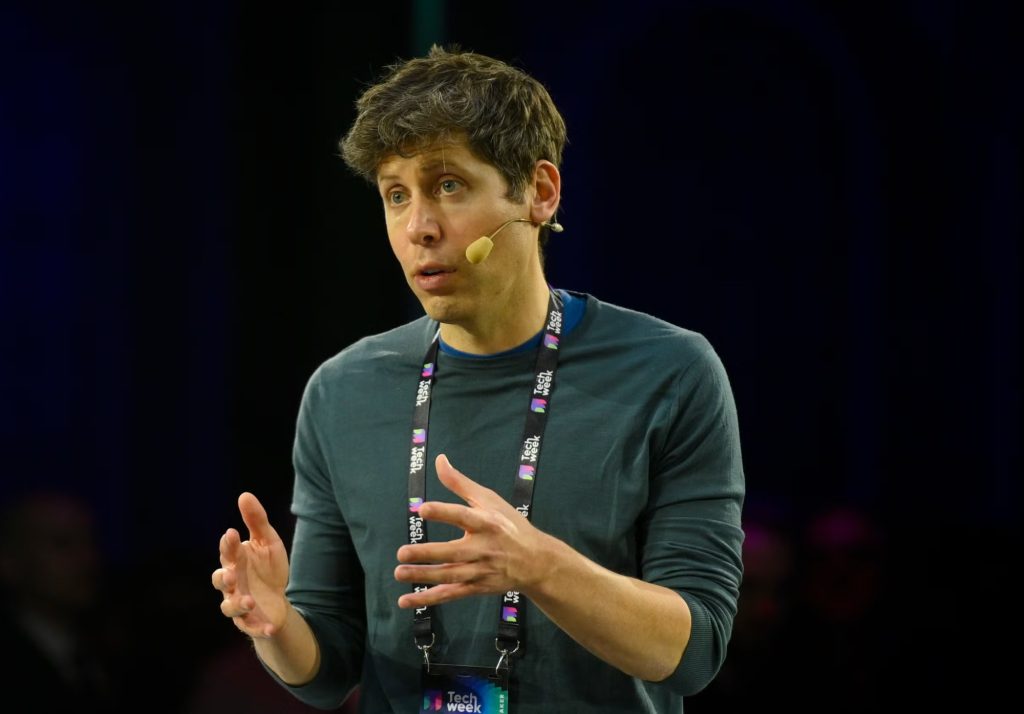
The Potential $10 Billion Equity Event
This is where the story of Sam Altman’s net worth gets significantly more interesting. When OpenAI began its conversion to a for-profit structure, reports emerged in September 2024 that the company was discussing granting Altman a 7% equity stake in the newly structured for-profit entity. At OpenAI’s then-valuation of $150 billion, 7% would have been worth approximately $10–11 billion — a figure that would have instantly made Altman one of the 50 wealthiest people in the world.
OpenAI completed its formal restructuring in October 2025. The for-profit branch became a Public Benefit Corporation, with the original nonprofit retaining a 26% equity stake. The specific equity arrangement for Altman was not publicly confirmed at the time of writing. What the May 2026 Musk v. OpenAI trial court filings did confirm is that as of December 31, 2025, Altman holds no direct equity in OpenAI. Whether a future equity grant is being structured, pending, or delayed by the ongoing legal and regulatory scrutiny of his investment conflicts remains one of the most consequential unanswered questions in the technology industry.
If a 7% stake is eventually formalised at a $730 billion valuation, its value would approach $51 billion — a number that would place Altman among the wealthiest individuals in human history. That equity event has not happened. But neither has it been ruled out.
The Real Source of Sam Altman’s Wealth: His Investment Portfolio
While the world have been focused on OpenAI, Sam Altman has been quietly building a venture portfolio that court filings, investigative journalism, and public disclosures have now partially illuminated. What those sources reveal is a collection of bets that are not random — they are an integrated thesis about what the world needs when artificial general intelligence becomes real.
Helion Energy: The $1.7 Billion Nuclear Fusion Bet
May 2026 court filings show Sam Altman’s disclosed stakes in nine private companies are worth more than $2 billion as of December 31, 2025, with Helion Energy, a nuclear-fusion startup, accounting for roughly $1.7 billion of that total.
Helion Energy is the single largest holding in Altman’s portfolio and perhaps the most audacious bet he has ever made. The company is attempting to build commercially viable nuclear fusion power plants — effectively replicating the process that powers the sun, on Earth, at scale. No fusion energy company has ever produced net positive energy on a commercial basis. Helion claims it will be the first.
His stake is valued at about $1.65–1.7 billion, based on Helion’s latest valuation of over $5.4 billion. The company has no revenue yet, but the hype around fusion — and OpenAI’s massive energy needs — has driven explosive growth.
The conflict-of-interest dimension of this investment is significant. OpenAI allegedly invested $375 million in Helion Energy, a fusion energy company where Altman also holds a personal stake. The core concern is that when the CEO of a company worth hundreds of billions also personally invests in firms that could benefit from that company’s resources, partnerships, or strategic decisions, the lines between corporate stewardship and personal enrichment start to blur.
Altman and OpenAI have pushed back on these characterisations, noting that his investments have been disclosed and that he holds no direct OpenAI equity. Congressional scrutiny of the overlaps intensified in May 2026, with the House Oversight Committee requesting information about OpenAI’s conflict-of-interest policies.
Reddit: The Exit That Built His Liquidity
Before Helion became his largest holding by value, Reddit was arguably the investment that most clearly demonstrated Altman’s ability to identify and hold transformative bets through long periods of uncertainty.
Altman sold his entire stake by the end of 2025. At Reddit’s 2024 IPO, his shares were worth over $600 million. By late 2025, Reddit’s stock had roughly quadrupled from IPO levels, delivering Altman a handsome exit — likely well north of $600 million in realized gains.
The Reddit investment dates to Altman’s Y Combinator era, when he backed the company long before it was clear whether the platform would survive, let alone become the internet’s de facto public forum and a $10+ billion public company. The exit gave Altman significant liquid capital — real cash, not paper valuations — that substantially underpins the lower end of his net worth estimates.
Stripe: $633 Million in the World’s Most Valuable Private Fintech
Court filings also show about $633 million in Stripe, which provides payments and financial software services. Stripe, co-founded by Patrick and John Collison, processes hundreds of billions of dollars in payments annually and has been valued at up to $70 billion at its peak. Altman’s investment dates to his Y Combinator days, when Stripe was an early batch company.
Stripe represents a different risk profile from Helion: it is a revenue-generating, cash-flow-positive business with a clear path to public markets. When Stripe eventually goes public — a widely anticipated event — Altman’s stake will convert from a private valuation to a liquid public market price.
Retro Biosciences: A $180 Million Longevity Bet
Retro Biosciences, the longevity company Altman has discussed in public settings, closed a funding round in May 2026 valuing it at $1.8 billion, down from a $5 billion figure that had circulated in late 2025. Altman personally invested approximately $180 million in the company; May 2026 court filings carried his stake at around $258 million.
Retro Biosciences is pursuing one of the most ambitious goals in biology: adding ten years to the healthy human lifespan. Altman’s $180 million personal investment is one of the largest personal checks any individual has written into a private biotech. It reflects a genuine conviction — Altman has spoken publicly about longevity research for years — rather than a financial optimisation strategy.
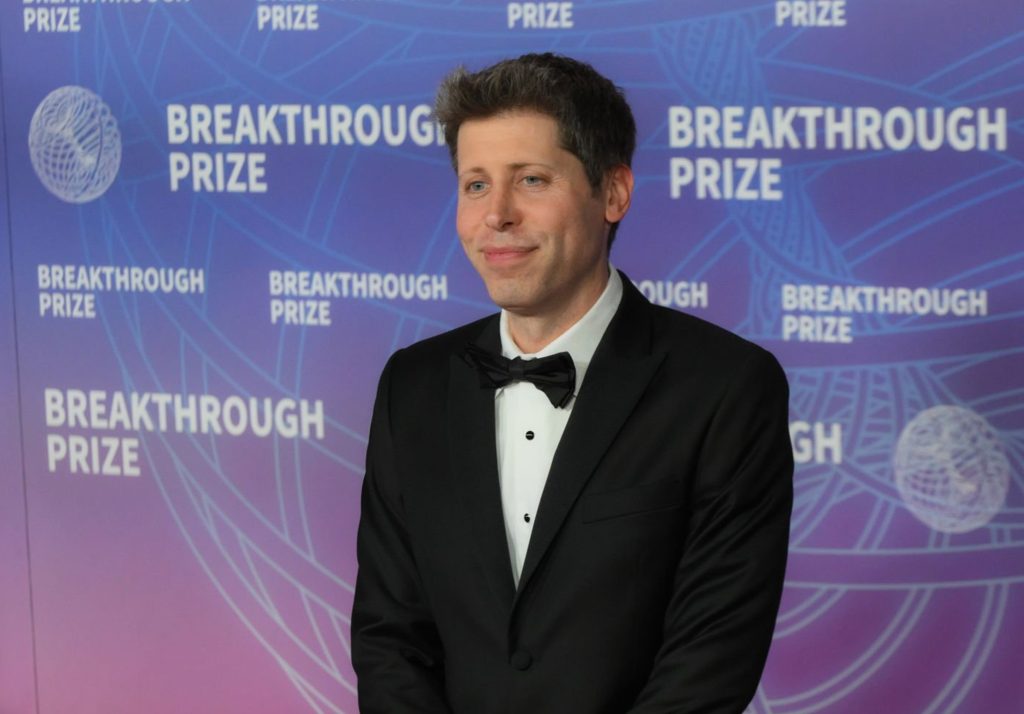
World (formerly Worldcoin) / Tools for Humanity
Altman co-founded Worldcoin in 2020 alongside Alex Blania and Max Novendstern. The project, now rebranded World, uses a hardware device called an “orb” to scan users’ irises and verify their unique humanity — creating a biometric proof-of-personhood that Altman envisions as essential infrastructure for a world in which AI makes it difficult to distinguish humans from machines.
As of late 2025, World has approximately 33 million app users and 15 million Orb-verified users. World raised $135 million, led by a16z and Bain Capital Crypto. As of March 2026, the WLD token’s market cap stood at approximately $852 million, with a fully diluted valuation of $2.74 billion — though the token is down more than 98% from its all-time high.
Tools for Humanity, the company that develops World’s infrastructure, is a significant long-term bet on the idea that global digital identity will be worth trillions. Whether that thesis proves correct will depend on regulatory outcomes in dozens of jurisdictions, the ultimate success of AI-generated content in creating the identity crisis Altman predicts, and the company’s ability to achieve global scale before competitors develop alternative solutions.
Cerebras, Oklo, Merge Labs, and the Infrastructure Thesis
The rest of Altman’s disclosed portfolio reveals a consistent theme: he is betting on the physical and computational infrastructure that AI will require.
Cerebras is an AI chipmaker and a competitor to Nvidia in the AI compute market. Altman holds a relatively small ~$3 million stake in Cerebras. The company just completed one of 2026’s biggest IPOs, raising billions at a multi-billion-dollar valuation, with strong demand driven by AI compute hunger. OpenAI signed a major multi-year compute deal with Cerebras worth up to $10–20 billion in capacity.
Oklo is a nuclear fission company — distinct from Helion’s fusion focus — that Altman took public through his own SPAC (Special Purpose Acquisition Company). Oklo designs small modular reactors intended to provide clean, reliable power to data centres — exactly the kind of customer base that OpenAI’s infrastructure requirements represent.
Merge Labs is a brain-computer interface startup that Altman co-founded in January 2026. Notably, it received a $252 million check from OpenAI — a fact that immediately drew conflict-of-interest scrutiny, given Altman’s co-founder role in the startup and his leadership of the investor.
The $76,000 Salary: What It Means and What It Doesn’t
Altman’s annual compensation from OpenAI — approximately $76,011 as of the most recently disclosed figure — is one of the most discussed numerical curiosities in the technology business. It is less than the median salary for a software engineer in San Francisco. It is a rounding error against the $730 billion valuation of the company he runs.
The salary exists for a technically specific reason: OpenAI’s nonprofit origins meant that its CEO was compensated at nonprofit executive levels, and the minimum salary required to qualify for employer-sponsored health insurance in the United States is a well-known threshold. Altman has referenced this directly in public remarks.
What the salary genuinely does not reflect is Altman’s financial situation, which is comfortable by virtually any standard outside his own peer group. His $27 million San Francisco mansion sits in a city where the median household income is $126,730. He has access to private air travel, a network of global relationships that opens any door, and a personal investment portfolio worth several billion dollars.
The salary is better understood as a structural artifact of OpenAI’s unusual governance history and a deliberate positioning choice — a statement about motivation and mission alignment — than as a description of actual financial circumstances.
The Musk vs. OpenAI Trial: What It Revealed About Altman’s Wealth
The May 2026 trial of Elon Musk’s lawsuit against OpenAI and Sam Altman was, in financial terms, the most illuminating public disclosure of Altman’s personal wealth in history. Court filings introduced as evidence included a confidential list of Altman’s stakes in nine private companies and their fair market values as of December 31, 2025.
Those filings confirm: no direct OpenAI equity; Helion at approximately $1.7 billion; Stripe at approximately $633 million; Retro Biosciences at approximately $258 million; and total disclosed stakes in nine companies exceeding $2 billion. Forbes, incorporating these figures alongside earlier estimates of his Reddit exit proceeds and other holdings, revised its estimate of Altman’s total net worth upward to more than $4 billion.
A federal judge in California dismissed the lawsuit from Elon Musk against OpenAI after a jury found that he exceeded the statute of limitations. Altman won. But the trial’s damage to his public reputation was real regardless of the legal outcome. Former OpenAI board members and executives who worked closely with Altman reiterated their claims in court that he is manipulative and has shown a pattern of deceptive communication with the board — the same characterisation that the original board used when they briefly fired him in 2023.
Altman disputes these characterisations. The conflict between his supporters — who see a visionary leader navigating genuinely unprecedented technological territory — and his critics, who see a self-dealing operator with insufficient accountability, has defined the public perception of his career and is unlikely to resolve cleanly regardless of legal outcomes.
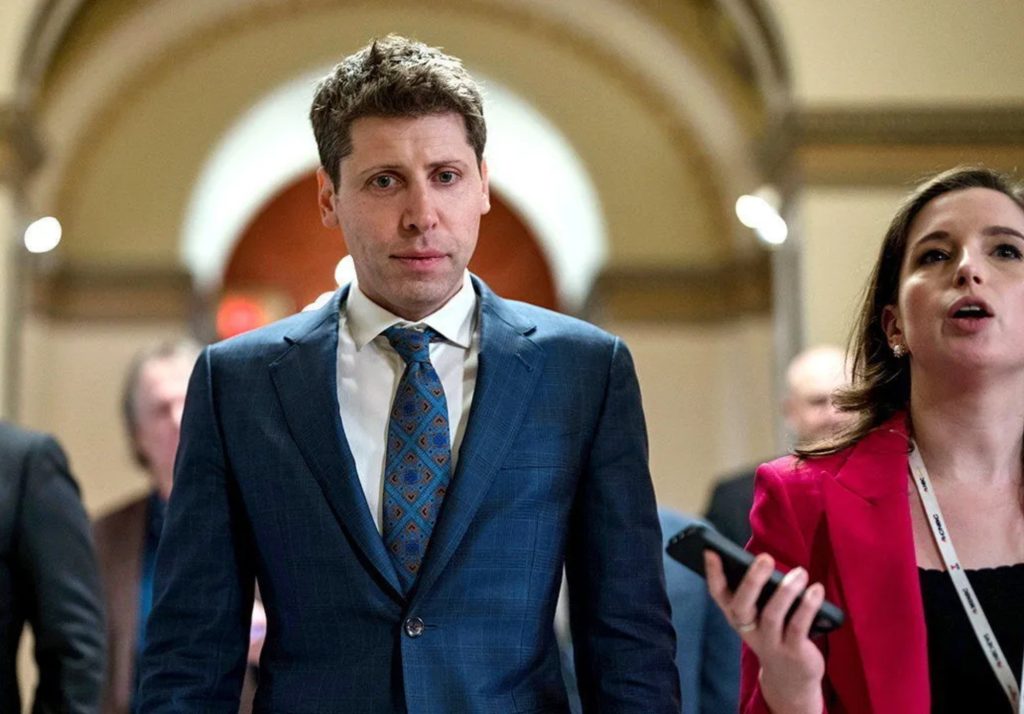
The November 2023 Firing: Five Days That Changed Everything
No account of Sam Altman’s career can skip past the extraordinary events of November 2023, when OpenAI’s board of directors abruptly fired him on a Friday, reversed course under pressure from employees and investors, and reinstated him with a new board just five days later.
The original board’s stated reason was that Altman “was not consistently candid in his communications with the board, hindering its ability to exercise its responsibilities.” This language became the foundation for years of subsequent controversy — Elon Musk’s legal team used it extensively during the 2026 trial, and former board members reaffirmed it under oath.
What the firing and rehiring also demonstrated, unambiguously, is the degree to which Altman had become irreplaceable from the perspective of OpenAI’s commercial partners and employees. Approximately 700 of OpenAI’s 770 employees signed a letter threatening to resign if Altman was not reinstated. Microsoft, OpenAI’s largest investor and commercial partner, made clear that its confidence in the organisation depended on his return. The new board that was assembled to reinstate him was configured to make a repeat of the firing structurally much more difficult.
The episode matters financially because it defined the power dynamics that have governed OpenAI since. Altman returned to a more secure position than the one he left. And the non-profit board that fired him was effectively replaced with individuals more aligned with OpenAI’s commercial trajectory — a trajectory that eventually produced the for-profit restructuring and the $730 billion valuation.
Sam Altman’s Real Estate and Personal Assets
Altman owns a $27 million mansion in San Francisco’s Pacific Heights neighbourhood — one of the most expensive residential addresses in the United States. He previously owned a Napa Valley ranch, which he has since sold. In early 2026, he listed a Hawaii mega-estate for sale, reflecting either a rationalisation of his real estate portfolio or a redeployment of capital toward his investment priorities.
He married Oliver Mulherin, an Australian software engineer, in Hawaii in 2024. Their first child arrived via surrogacy in early 2025. Altman is one of a relatively small number of prominent tech executives who are openly gay, and he has spoken directly about how his identity informs his worldview and his work on AI’s social implications.
His lifestyle, while affluent by objective measures, is notably restrained relative to his peer group of tech billionaires. He does not own a superyacht, has not built a private island, and does not maintain the kind of conspicuous asset base that typically accompanies nine-figure or ten-figure wealth. The explanation he has offered — that he is focused on mission and finds the accumulation of objects uninteresting — is consistent with his public persona, though it is also consistent with someone who knows that his most significant financial event has not yet occurred.
Expert Analysis: The Unusual Architecture of Altman’s Wealth
What makes Sam Altman’s financial situation structurally fascinating is the way it inverts the normal relationship between power and wealth in Silicon Valley.
The conventional tech wealth story goes like this: founder starts company, retains equity, company succeeds, founder becomes billionaire. The equity comes first; the power and influence follow. Altman’s story runs in reverse. He accumulated influence first — at Y Combinator, then at OpenAI — and used the access and insight that influence provided to make investment decisions that built his wealth independently of the companies he led.
This means that Altman’s $4 billion is, in a meaningful sense, a purer reflection of his investment acumen than most Silicon Valley fortunes. He didn’t start Helion Energy. He didn’t found Stripe. He backed them with his own capital, at risk, based on his own conviction about what would matter. The fact that Helion now represents $1.7 billion of his net worth is a function of judgment, not of founding equity.
It also creates the conflict-of-interest problems that have defined the controversies of the past year. When you use your position as CEO of a $730 billion company to direct capital, partnerships, and resources toward companies you personally own, the ethical question of whether you are acting in shareholders’ interests or your own becomes unavoidable. Altman’s defenders argue that the investments were disclosed, that the conflicts are manageable, and that the companies OpenAI invested in — Helion, Cerebras — provide genuine strategic value. His critics argue that the overlaps are too numerous and too financially significant to be governed adequately by disclosure alone.
Neither side is obviously wrong. The legal system, in the Musk trial, sided with Altman. The court of public opinion remains divided.
Future Outlook: What Sam Altman Could Be Worth in Five Years
The future of Sam Altman’s net worth hinges on a small number of very large variables.
The OpenAI equity question is the single most consequential factor. If a 7% stake in a company currently valued at $730 billion is formalised — either through a direct grant or through an OpenAI IPO in which Altman receives founder-equivalent compensation — his net worth could increase by $30 to $50 billion in a single transaction. That outcome would make him one of the five wealthiest people in the world. It would also likely trigger regulatory scrutiny of a kind that even the Musk trial did not produce. The timeline for this, if it occurs, is most likely tied to OpenAI’s public offering, which both OpenAI and its investors have signalled is a near-term priority.
Helion Energy, his largest current holding at $1.7 billion, is either worth nothing or worth many multiples of its current valuation. Fusion energy that works commercially is among the most transformative technologies conceivable. Fusion energy that doesn’t work is a write-off. Altman has committed roughly $375 million of his own capital to this bet. The scientific and engineering progress Helion has reported is real, but the path from demonstrated milestones to commercial power plants is measured in years and billions of dollars.
The World / Tools for Humanity project, if it achieves global digital identity infrastructure status, could be worth far more than its current $2.74 billion fully diluted token valuation suggests. It could also be derailed by privacy regulation — the project has already been banned or restricted in several European jurisdictions due to its biometric data collection methods.
The broader venture portfolio — Stripe, Cerebras, Oklo, Retro Biosciences, and others — represents a collection of high-quality bets in sectors with strong secular tailwinds. Stripe’s IPO alone would likely produce a liquidity event of hundreds of millions from Altman’s stake.
The base case, absent the OpenAI equity event, sees Altman’s net worth growing moderately — from $4 billion today to perhaps $6–10 billion by 2030 as portfolio companies mature and produce liquidity. The upside case, if OpenAI equity is granted and the company goes public at a valuation near its current level, puts him in $50+ billion territory. The downside case, in which Helion fails, World is banned globally, and the AI investment bubble deflates, could see significant erosion of paper values — though his Reddit exit has already converted significant value into cash.
What is certain is that no individual is more centrally positioned at the intersection of artificial intelligence, energy, and digital identity than Sam Altman. Whether the financial rewards for that positioning arrive in proportion to his influence — or whether he remains the most powerful person in tech who doesn’t own the thing that makes him powerful — is the most interesting financial story in the world right now.
Frequently Asked Questions
What is Sam Altman’s net worth in 2026?
Sam Altman’s net worth is estimated at approximately $3.3 to $4 billion as of 2026, according to Forbes. The range reflect the difficulty of precisely valuing private company stakes, which represent the majority of his holdings.
Does Sam Altman own equity in OpenAI?
No. As confirmed by May 2026 court filings in the Musk v. OpenAI trial, Sam Altman holds no direct equity in OpenAI despite serving as its CEO and co-founder since 2015. There have been reports that OpenAI discussed granting him a 7% stake during its for-profit restructuring, but no specific equity grant has been publicly confirmed.
How much does Sam Altman earn as CEO of OpenAI?
Sam Altman’s annual salary from OpenAI is approximately $76,011 — an amount he has described as the minimum required to qualify for employer-sponsored health insurance. His personal wealth comes entirely from his venture investment portfolio, not from OpenAI compensation.
Where does Sam Altman’s wealth come from?
Altman’s wealth comes from a diversified portfolio of early-stage technology investments made primarily during and after his tenure as president of Y Combinator (2014–2019). His largest holding is a roughly $1.7 billion stake in Helion Energy, a nuclear fusion startup. Other major holdings includes approximately $633 million in Stripe, and significant stakes in Retro Biosciences, World/Tools for Humanity, Cerebras, and Oklo. He also realised more than $600 million from his Reddit investment during and after Reddit’s 2024 IPO.
What is Helion Energy and why does Sam Altman own it?
Helion Energy is a nuclear fusion startup attempting to build commercially viable fusion power plants — technology that could provide virtually limitless clean energy. Altman is the company’s largest individual investor, with a stake valued at approximately $1.7 billion. OpenAI has also invested $375 million in Helion and signed a power purchase agreement to buy electricity from Helion’s first commercial plant, a fact that has attracted conflict-of-interest scrutiny given Altman’s dual role as personal investor and OpenAI CEO.
Was Sam Altman fired from OpenAI?
Yes. In November 2023, OpenAI’s board of directors abruptly fired Altman as CEO, stating that he “was not consistently candid in his communications with the board.” He was reinstated five days later following a near-total employee revolt and pressure from major investors including Microsoft. A new board was assembled as part of the reinstatement agreement.
What is Worldcoin / World and what does it have to do with Sam Altman?
Altman co-founded Worldcoin (now rebranded World) in 2020 alongside Alex Blania and Max Novendstern. The project uses a hardware device called an “orb” to scan users’ irises, creating a biometric proof-of-personhood designed to verify that users are unique humans rather than AI bots. As of late 2025, World has 33 million app users and 15 million Orb-verified users. The WLD cryptocurrency token has declined more than 98% from its all-time high.
Could Sam Altman become one of the world’s richest people?
Potentially, yes. If OpenAI formalises a 7% equity stake for Altman at the company’s current $730 billion valuation, the stake would be worth approximately $51 billion — placing him among the five wealthiest people in the world. That equity event has not been confirmed as of June 2026. OpenAI is expected to pursue a public offering in the coming years, and Altman’s compensation structure may be determined as part of that process.
Conclusion: The Most Interesting Wealth Story in Tech
Sam Altman’s net worth of $3.3–4 billion is both remarkable and, in the context of what he has built, almost comically modest. He runs a company worth $730 billion. He doesn’t own a share of it. He earns $76,011 a year from it. And he has built his actual fortune on a completely separate set of bets — on fusion energy, digital identity, longevity science, and the physical infrastructure of the future. You can check out more of the other Richest People Who Lost It All as well as Highest-Paid CEOs,