The wealthiest CEOs didn’t all just land sweet contract deals. For many, their base salary is lower than that of many mid-level managers. The numbers reported by the media stem from equity rewards. Equity rewards are stock that is given as a grant due to performance and, similar to a bet, requires the company to reach goals that are difficult to achieve and are set for the far future. A pay package of $200 million is a bet on the future, as opposed to being a paycheck.
This piece highlights the highest-paid CEOs in 2025 and their compensation packages, providing the reasoning behind their business compensation structures and addressing questions typically left out due to formatting. What did these CEOs do to deserve these payouts? Which factors influence the final compensation?
Quick Facts: Top 5 Highest-Paid CEOs in the World
| Rank | CEO | Company | Total Compensation (2025) | Base Salary |
|---|---|---|---|---|
| 1 | Niraj Shah | Wayfair | $280.8 million | $80,000 |
| 2 | Hock Tan | Broadcom | $205.3 million | $1.2 million |
| 3 | David Solomon | Goldman Sachs | $118.9 million | $2 million |
| 4 | Sridhar Ramaswamy | Snowflake | $101.3 million | ~$725,000 |
| 5 | Elon Musk | Tesla | $56B+ (2018 package reinstated) | $0 |
Important note on methodology: These compensation figures are for the 2025 fiscal year and are based on the most recent SEC-compliant proxy statement filings. Total compensation for these five CEOs includes, among other things, base salary, cash bonus, stock award, option award, and other perks. For the top five, more than 90% of the equity award is performance-based and has a payout several years after the award is made. Musk’s compensation is for the reinstated 2018 package, which is a one-of-a-kind legal and structural package, as discussed in this report.
Understanding CEO Compensation Before We Begin
The biggest error in interpreting CEO compensation rankings is considering equity grants as cash. They are not liquid.
When the board has approved a stock grant valued at $200 million, that figure represents the grant-date accounting value of shares that will not vest — and not be available — unless the executive stays with the company, and most of the time, unless the company achieves certain stock price or revenue goals over a multi-year span. If the goals are not met, the grant will end up being worth nothing. If the stock price experiences a decline, the value achieved will end up being a small fraction of the amount reported.
In 2025, the median CEO pay for the largest public companies in the U.S. was $29.4 million, a 23.2% increase over 2024, the largest increase since the 2021 post-pandemic boom. Pay increases were a result of boards choosing larger multi-year equity grants to retain and motivate executives during the AI era. In 2025, five CEOs earned more than $100 million in total reported pay, with two more than $200 million.
These five were selected in the context laid out above. The data referenced is sourced from SEC proxy statements or verified data from Equilar, with no estimates.
1 — Niraj Shah, Wayfair: $280.8 Million
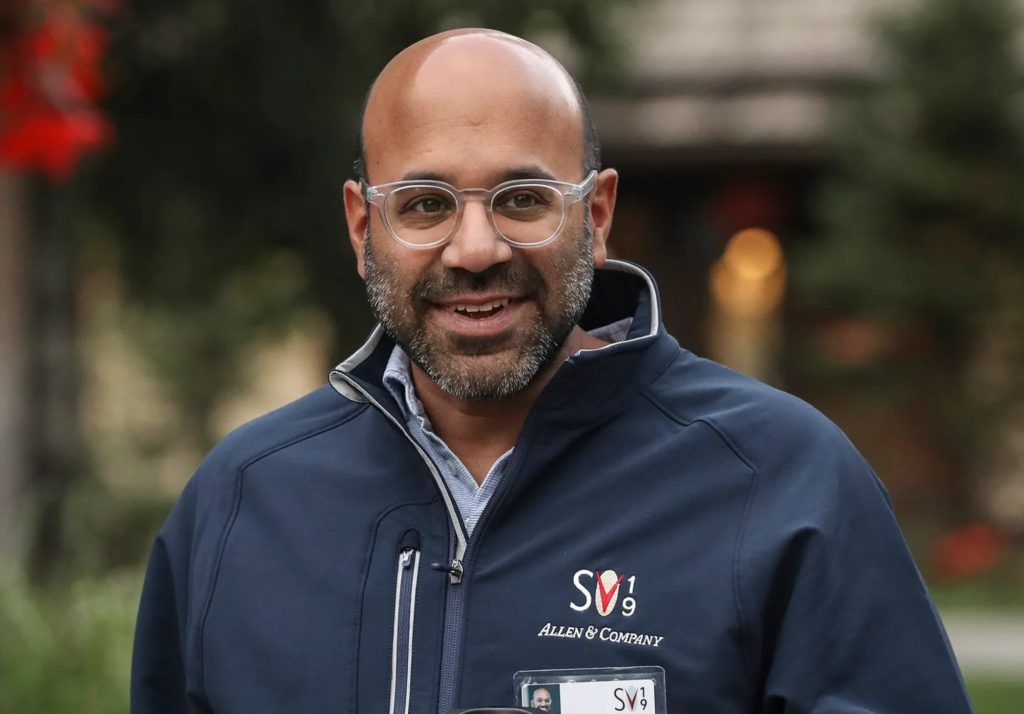
Unless you work in ecommerce, you probably don’t know Niraj Shah. As the CEO of Wayfair, the largest ecommerce platform for home goods and furniture, his income used to be the lowest out of all the major tech CEOs in Massachusetts.
That changed in 2025.
From $80,000 Salary to $280 Million Compensation
While Shah earned an $80,000 salary as Wayfair’s CEO, his other sources of income added up to $280,847,068. Consistent with the trend of his previous salaries, his 2025 compensation included $0 in cash bonuses, $0 in stock options, an award of $280,557,500 in restricted stock, and $209,568 in other compensation.
His base salary? $80,000. That’s in the range of a starting salary for a mid-level software engineer in the Bay area. The rest of his compensation came from a single performance-based equity grant.
Wayfair’s board set up a unique plan so that Shah would only receive stock in Wayfair if the price of Wayfair stock reached a specific goal in a predetermined timeframe. From 2021 to 2023, he has consistently ranked at the lowest position of the highest-paid tech CEOs from Massachusetts with a total compensation of less than $1 million, in all four of the previous years.
The grant is not based on prior performance. It is targeted at the future performance incentives of the recipient. The Board described it as a ten-year long-term equity grant, which will only vest if Wayfair achieves substantial long-term success and if the company achieves ambitious success far in excess of its current valuation today. The first tranche is not eligible for vesting for the next two years, with each of the remaining tranches having a higher stock price threshold.
The Wayfair Story
Shah, along with Steve Conine, co-founded Wayfair in 2002, after having founded their first company, CSN Stores. Prior to its public listing in the New York Stock Exchange in 2014, Wayfair had consolidated all its home goods e-commerce websites. In 2011, CSN stores adopted the Wayfair brand.
The history of Wayfair demonstrates the harsh realities of e-commerce. From 2014 to 2021, Wayfair increased its sales from $600 million to $14 billion, but the company remained unprofitable. Wayfair struggled to compete with Amazon and other retailers, such as IKEA and Williams-Sonoma.
Then came the COVID-19 pandemic. The situation was a singular opportunity for Wayfair, as consumers were contacting at home and purchasing goods on e-commerce websites. In 2020, Wayfair’s stock peaked at $300. After the opportunity, the stock plummeted to $50 and Wayfair returned to operating at a loss.
Shah’s 2025 grant was given when the board called Wayfair’s “inflection point,” where it would begin to be profitable again and gain more market shares, leading to an increase in Wayfair’s overall growth. Shah’s year-to-year pay increase looks like an increase of 99,088% — the grant pays out over several years and only pays out if Wayfair meets certain stock goals. Shah’s actual pay today is trivial compared to the grant.
Shah owns 6.87% of Wayfair stock, valued at $655 Million, which gives him a strong incentive to further Wayfair’s interests. If Wayfair is successful, so is he. If Wayfair fails, he is much worse off than the grant.
2 — Hock Tan, Broadcom: $205.3 Million
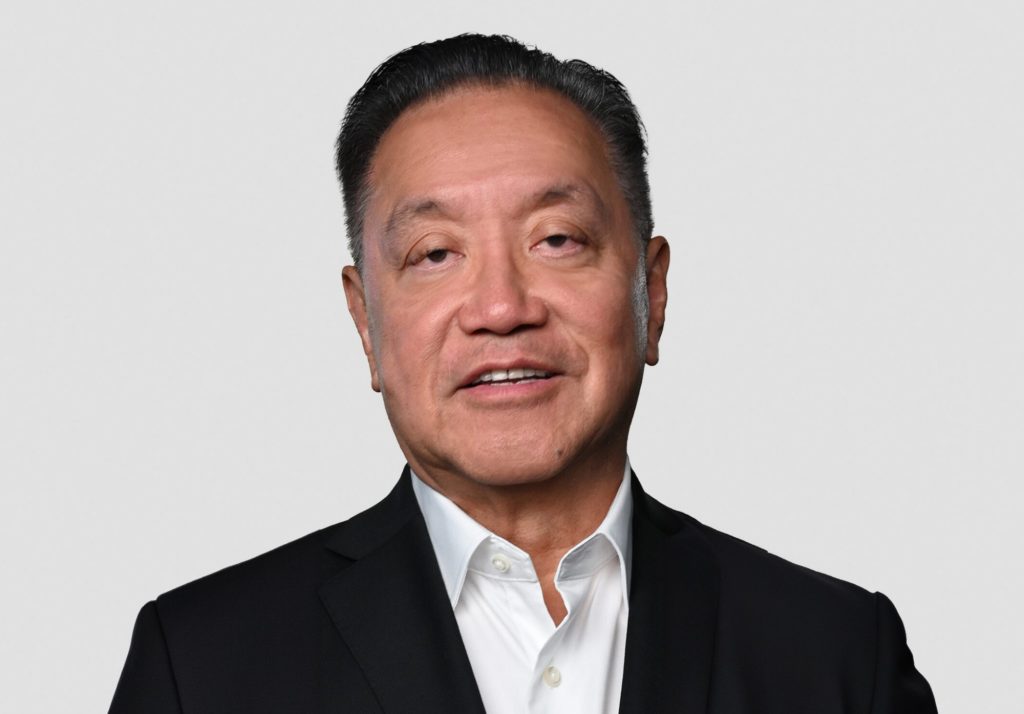
Hock Tan is one of the top semiconductor executives and one of the most underappreciated — until now. The 2025 payment of $205.3 Million to Tan from Broadcom denotes both the magnitude of the business he built and the intensity of the AI Infrastructure race he is now involved with.
The Scholar from Penang who Built a Chip Empire
Tan Hock Eng was born in Malaysia in Penang in 1951 or 1952. He was the first in his family to attend MIT after receiving a scholarship. He graduated from there in 1975, receiving his bachelors and his masters in mechanical engineering, and then received his MBA from Harvard Business School.
Tan took finance positions at General Motors and PepsiCo after obtaining his MBA. He then returned to Malaysia to work as the managing director at Hume Industries. Afterward, Tan became the managing director at Pacven Investment. He was the CEO at Integrated Circuit Systems from 1999 to 2005 and the chairman at Integrated Device Technology from 2005 to 2008.
In March 2006, Tan became the CEO of Broadcom, a mid-sized chip company. He implemented aggressive acquisitions and transformed Broadcom into a major tech company.
The largest of his attempted acquisitions was a 2017 bid to acquire Qualcomm for $117 billion. That acquisition was halted by the U.S. government for national security concerns, and was regarded as a setback. In hindsight, his focus was redirected to the acquisition of CA Technologies for $61 Billion and the acquisition of VMware, which was the largest acquisition in 2023 after a lengthy regulatory challenge, of $69 Billion. After acquiring VMware, Broadcom dominated enterprise virtualization technology, which has a much higher revenue yield compared to verticals analysts were expecting.
The AI Bet That Supported His $205 Million Package
Tan’s stock awards, part of a $205.3 million package, will net him $202.4 million, with a $1.2 million salary. Tan’s total was $2.63 million in 2024, the year he received no stock awards.
The incentive was Tan’s bet Broadcom could become a leading AI infrastructure company. Broadcom, in partnership with their key customers, Google, Meta Platforms, and ByteDance, developed their own application-specific integrated circuits branded as XPUs. By fiscal 2025, revenue generated from AI custom circuits directly resulted in cost savings for customers, particularly for specialized AI training and inference, over deploying general purpose AI GPUs.
In September 2025, Tan’s new Hyperscaler customer contracted Broadcom for over $10 billion in AI infrastructure orders. In October 2025, Tan worked with OpenAI to design custom AI accelerators, with a planned 10-gigawatt scale for mass production in 2026. Tan’s custom accelerators focus on AI, and he linked his own compensation to these initiatives by increasing the expected annual AI revenue from 2025’s $20 billion to 2030’s $120 billion.
That is no small ask. This would place Broadcom as the industry leader in AI infrastructure and support offerings, exceeding Nvidia’s offerings by 5 to 6 times.
In 2024, the Global Semiconductor Alliance presented the Dr. Morris Chang Exemplary Leadership Award to Tan, his first industry award. This honor demonstrates the esteem with which his industry peers hold him, and acknowledges his contributions to the semiconductor industry over the last 20 years.
More than $205 million of Tan’s compensation package, like the one offered to Shah, is performance-based. Unlike Shah, Tan’s goals are set against the backdrop of one of the most important technology skirmishes in recent history. If the AI infrastructure build out continues apace and Broadcom captures the rapidly growing custom silicon market enabled by its relationships with the hyperscalers, Tan’s package will be viewed as a tremendous bargain.
3 — David Solomon, Goldman Sachs: $118.9 Million
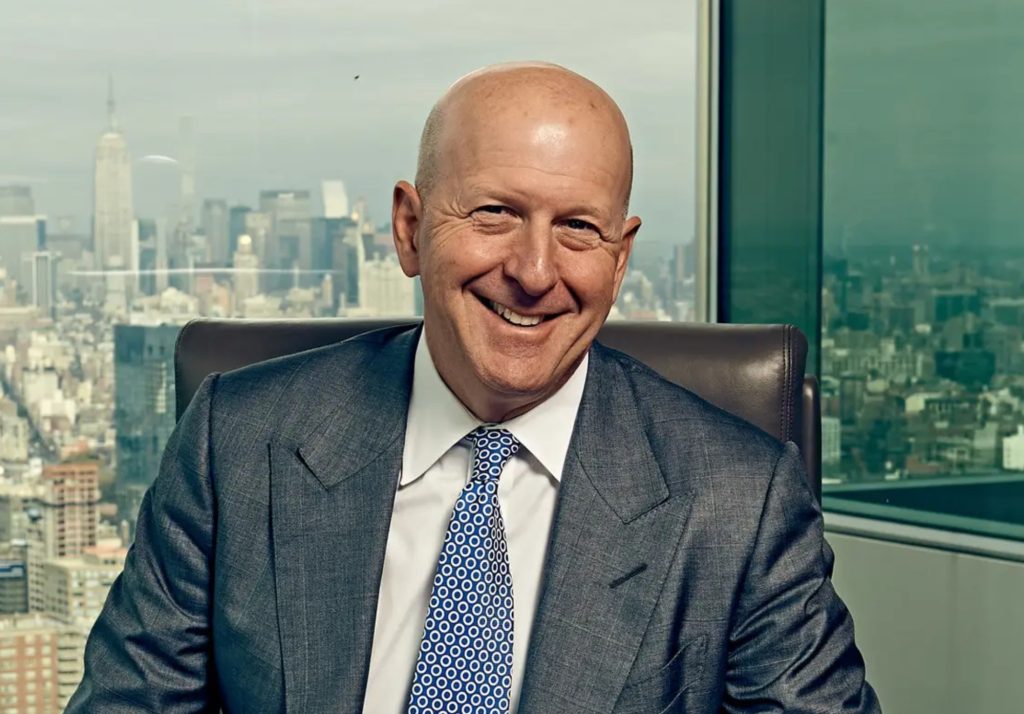
One of the most perplexing examples of the phenomena that frustrates most observers of CEO pay, is David Solomon’s 2025 compensation. In the same year, the same company, the same executive, can have two wildly different yet completely valid figures for total pay reported.
Goldman Sachs confirmed Solomon’s pay for 2025 would be $47 million. Equilar reported it at $118.9 million. Both figures are correct.
Why the Same CEO Has Two Pay Figures
The $47 million is his annual pay. The greater sum is a one-time award for retention and incentive layered on top. The gap you see between two wildly different numbers for the same CEO is usually explained by one factors like this.
Solomon’s total Equilar compensation of $118,891,594 included $2,000,000 salary, $10,125,000 bonus, $0 in stock options, an award of $105,287,875 in stock, and $1,478,719 in other compensation.
The stock award, which represents almost 88% of his total award, consists of his annual performance-based stock award and a one-time business retention award valued at $80 million. The business retention award is a one-time award approved by the Board of Directors in exchange for the commitment of Solomon to remain as Chief Executive Officer for another five years. Next year, Solomon’s Equilar pay will significantly decrease, as the retention award is not paid yearly.
Leading Wall Street’s Best Year Since the Pandemic
The Board of Directors of Goldman Sachs cited “continued and significant shareholder value creation” as one reason for Solomon’s annual bonus. Goldman Sachs reported one of its most profitable years with almost $58.3 billion in revenues and $17.2 billion in earnings.
The announcement of Goldman’s annual bonus came one day after JPMorgan Chase announced that its Chief Executive Officer, Jamie Dimon, would receive a pay package valued at $43 million. In 2023, Solomon’s pay package is $47 million, and for the year, Solomon is the higher paid Chief Executive Officer. This is remarkable, as Dimon is a decade-long benchmark for the highest paid Chief Executive Officer in U.S. banking.
In 1999, Solomon became a Partner at Goldman Sachs, and in 2018, he became Co-President, then Chief Executive Officer, in the same year. He is a practicing DJ under the stage name D-Sol. This has resulted in received unnecessary media attention and ridicule from financial media, but he has refused to quit his passion.
The way he led Goldman post-pandemic is the main justification for his pay. He closed Marcus, the banking project, and put the focus back onto the investment banking and asset management divisions. He also set the firm up for the future of AI in financial services. In comparison, the six largest US banks made a combined profit of $157 billion in 2025. This was an 8% increase, which made the year the best for the industry after the pandemic. This context makes Solomon’s annual pay of $47 million represent an extremely small portion of the value he oversaw.
4 — Sridhar Ramaswamy, Snowflake: $101.3 Million
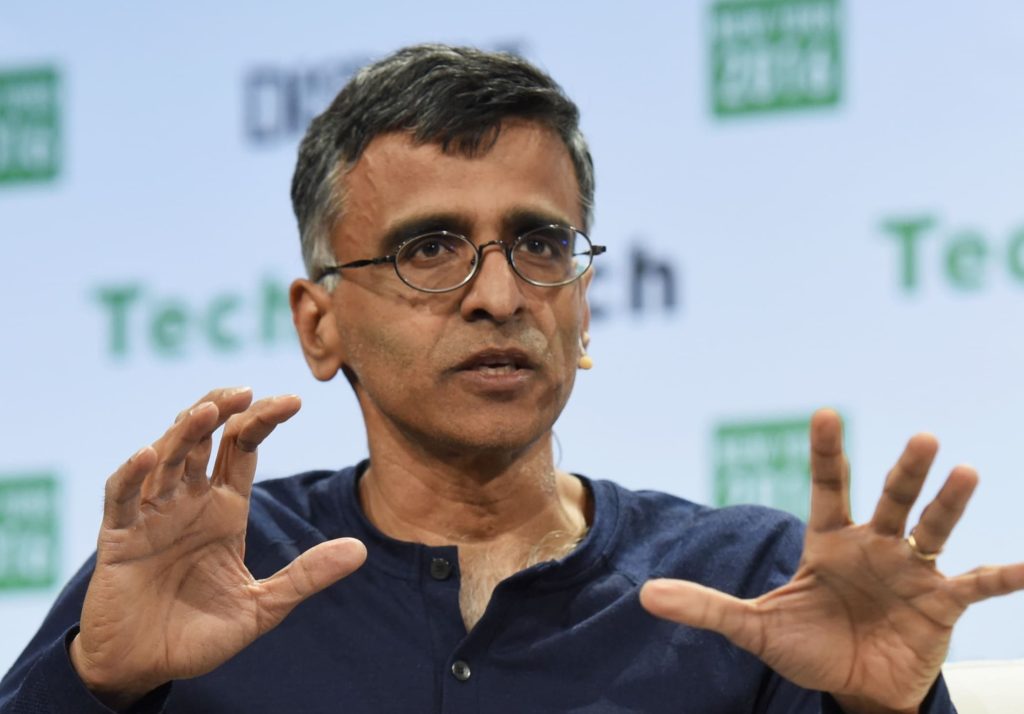
As one of the five CEOs on the list, the general audience will need the most overview for Sridhar Ramaswamy. He also has one of the most extreme examples for a corporate bet in 2025.
The Google Ad Chief Turned AI Data CEO
Ramaswamy was born in Madurai, Tamil Nadu, India. He graduated with a degree in computer science from the Birla Institute of Technology and Science in Pilani. His PhD in computer science was from Brown University. He joined Google in 2003, where he spent the next 15 years building its ads and commerce division. After serving in the role of Senior Vice President of Ads and Commerce, he left in 2018. After co-founding the ad-free search engine Neeva, he sold it to Snowflake in 2023.
Snowflake appointed Ramaswamy as CEO in February 2024, succeeding Frank Slootman, who presided over one of the greatest software IPOs of all time. (Snowflake went public on the NYSE in September 2020, pricing its IPO at $120 per share and finishing the first day with a closing price of $254.) Ramaswamy’s compensation consisted largely of stock grants valued at $99 million, in addition to a salary of $725,137 for the year 2025. Snowflake is making a multi-year bet with Ramaswamy’s long-term compensation and focus on Ramaswamy’s mul
5 — Elon Musk, Tesla: $56 Billion (Reinstated 2018 Package)
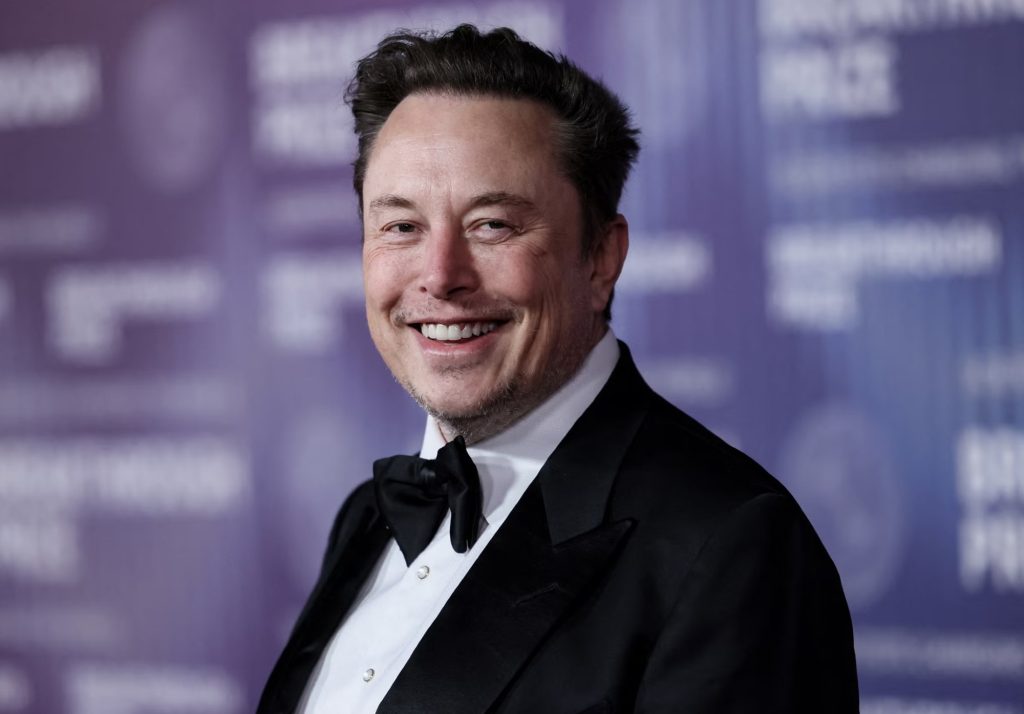
Musk’s compensation is ranked #5, and it is a category of one. Firstly, Musk does not have a salary. Secondly, he does not have an annual bonus. Finally, he does not appear on the Enguilar 100 list because Tesla had not filed their proxies by the March 2026 deadline. Nevertheless, the story of compensation and Musk is defined by the largest executive pay package in history.
The $56 Billion Package and Its Seven-Year Legal Battle
Musk was given a ten-year package of only stock options, meaning, no salary and no cash, just stock options, which were divided into 12 tranches, each requiring Tesla to reach certain goals of a market cap and revenue, that were said to be, at best, highly improbable. Oddly, at the time, Tesla said Musk could earn $55.8 billion if he accomplished the goals.
He achieved all the goals. The market cap of Tesla went from $60 Billion in 2018, to being over the $1 Trillion mark in 2021. In 2022, Musk was granted the full options.
After that, the legal battle began. Tesla stockholder Richard Tornetta sued to have the package rescinded, claiming the board who approved the package was too close to Musk to have provided a fair and independent review. In January 2024, this was ruled to be the case by Delaware Chancellor, Kathaleen McCormick, who ruled the package was invalid and mandated that it be replaced.
In December 2025, the Delaware Supreme Court reinstated the equity compensation package that the Court of Chancery decided to rescind. The package that Musk received from Tesla in 2018 was originally assessed to be worth $55.8 billion. By the time the Court made its decision, the package was worth approximately $139 billion.
The Court’s decision to restore the 2018 compensation package validated Musk’s belief, which he had long maintained, that the Delaware legal system had overreached. The Court’s decision to invalidate the package was so frustrating to Musk that he made the decision to move Tesla’s operations to Texas.
A Second Package Worth Up to $1 Trillion
The saga involving Musk’s compensation from Tesla’s 2018 package is not over. In November 2025, Musk was awarded an even larger package after receiving the approval of Tesla’s shareholders to implement a new package valued at approximately $1 Trillion. The new pay package could add to Musk’s voting rights and increase them to around 25%.
Although the new pay package is contingent upon the achievement of certain milestones, it is the largest pay package to a chief executive in the history of corporate America. For context, the entire annual GDP of the Netherlands is approximately $1.1 Trillion.
Musk’s Real Wealth with Tesla Pay Excluded
Consider that Musk’s Tesla compensation doesn’t construct his overall wealth. Musk has an overall wealth of $679.4 billion according to the Forbes Real Time Billionaires List. He is the richest man to ever live by a long shot. Wisely, most of his wealth is allocated to his shares in Tesla, SpaceX, xAI, X (formerly Twitter), and Neuralink.
He is not paid a salary from either Tesla or SpaceX. The public is very concerned with his personal tax obligations because there is no realized income from unexercised, untaxed equity. With his reinstated Tesla Package, his shares are valued at $139 billion.
What makes Musk distinctly different from the other executives on this list is that his package is meant to make him not rich, but to keep him aligned with the other shareholders of Tesla during the specified targets. This alignment has proven effective, to say the least.
Compensation of the Executives: The Whole Picture
Upon analyzing the five packages of pay, there is a uniform framework that is misrepresented in the headlines every single time.
Salary is meaningless Take Shah, Musk and Tan for example. Shah’s salary is $80,000, Musk’s is $0, and Tan’s is $1.2 million. Each of these figures is a tiny fraction of their total disclosed compensation. For Shah, Musk and Tan, salary is essentially symbolic.
Equity grants are the actual currency. Most of the compensation discussed in this article arises from performance stock units, restricted stock awards and stock options. In fact, over 90% of the compensation discussed in this article comes from these three instruments. Equity compensation is flexible and contingent upon achieving certain goals. In many cases, stock options are completely worthless if certain goals are not achieved.
Equity compensation is not the same as the grant value. Niraj Shah is reported as having compensation of $280 million by Equilar. Using the grant-date value of stock for 2025, that is the value at the date of the grant. Whether Shah ever sees $280 million is completely dependent upon Wayfair’s stock over the next decade. In most cases, the reason there is such a large increase in a CEO’s compensation from one year to the next is that there is a large “mega-grant” of stock options or stock awarded in that year.
Performance targets are the means. The executive compensation packages that tie the greatest amount of equity to the achievement of the greatest measurable goals typically survive the greatest amount of shareholder scrutiny. In the case of Hock Tan, the PK award that he personally designed and granted to himself is contingent upon achieving Hock Tan’s stated goal of $120 billion in annual revenue from AI by 2030. This is the type of goal that boards of directors strive to achieve the most.
The CEO Pay Ratio tells the real story. In 2025, the average CEO Pay Ratio for major U.S. public companies was 341:1, up from 300:1 in the previous year, and median employee pay was reported at $99,229 (a nearly 10% increase from the previous year). Although employees received pay raises, the disparities in pay continued to increase, resulting in an increase in public outrage and pressure from regulators.
Frequently Asked Questions
Who is the highest-paid CEO in the world in 2025?
According to the proxy statements filed by U.S. public companies in 2025, Wayfair CEO Niraj Shah was the highest-paid CEO, with reported compensation of $280.8 million. In addition, the proxy statement filed by Tesls for the year 2025 would record Elon Musk with the largest CEO compensation in history to date, with a value of $139.3 billion, for the reinstated 2018 Tesla equity award.
How much of a CEO’s pay is actually cash?
For those at the very top, very little. Of Niraj Shah’s compensation, $80,000 was in cash. Elon Musk’s compensation was $0. Hock Tan’s base salary was $1.2 million, but his stock awards were $202 million. For those at the very top, 90–100% of CEO pay is in stock grants.
Why did Niraj Shah’s total pay increase by 990% in 2025?
Shah received a multi-year, performance-contingent equity grant in 2025 after earning less than $1 million for four consecutive years. This grant, which vests over the course of ten years, only vests if Wayfair’s stock hits certain thresholds — some requiring the stock to reach multiples of its current value. The 2025 value actually does not show cash earned. It reflects the grant-date accounting value of the eventual shares given to him if Wayfair performs at a very high level in the next decade.
Is Elon Musk the highest-paid CEO of all time?
Yes, and by a huge margin. The reinstatement of Musk’s 2018 compensation plan for Tesla — originally worth $55.8 billion and currently worth in excess of $139 billion due to stock price appreciation, represents the largest executive compensation plan in the history of the industry — is a blockbuster compensation plan Musk is set to receive. The recently approved 2025 plan is worth as much as $1 trillion — a contingent amount based on Tesla achieving very aggressive goals in the next ten years.
What is the meaning of CEO Pay Ratio?
The CEO Pay Ratio shows the total compensation of a CEO and the median compensation of the rest of the employees in the company. A 341:1 ratio, the median among the largest U.S. companies in 2025, would mean that the median CEO earned 341 times the median company employee. Due to SEC reporting rules, this ratio has to be reported and is increasingly being adopted as a measure of income inequality by employee stakeholders in the company, particularly employees’ labor organizations.
How are boards able to rationalize a $100 million plus salary for a CEO?
Boards rationalize extreme compensation in terms of irreplaceability, saying that the extreme compensation is a small cost to pay when the package is tied to achieving goals. Additionally, they have to meet the extreme compensation package because there is competition for the limited number of executives who are the best of the best. Critics of the extreme compensation say that there is a lack of evidence that supports the pay causes a direct impact to a positive performance in the company and that the Boards are made up primarily by current and former executives who are paid excessively. These executives have a natural incentive to green light excessive compensation.
Which CEO’s are paid the most?
The highest compensated CEOs are typically found in the technology and financial services industries. Among the top 5 highest earning CEOs of 2025, Two of the CEOs of Tech companies (Wayfair and Broadcom), Two of the CEOs of Financial and Data Companies (Goldman Sachs and Snowflake) and one CEO of a Tech and Auto company (Tesla) are included. This is a reflection of the companies where compensation that is tied to equity has grown to the largest amounts of value.
Conclusion
In conclusion, the 5 highest paid CEOs in 2025 have all received equity grants that are potentially worth significant amounts of money. These CEO’s receive most of their compensation in stock grants that will not vest unless the company achieves certain financial metrics that are currently challenging to achieve.
The most significant concern about CEO pay isn’t about the size of the numbers, which we can all agree are large. Instead, the real question is whether linking pay to equity performance causes companies to be run better, or if that merely creates a group of executives who are paid unearned money because of changes in the market that they had nothing to do with.
That question is hard to answer. What is easy to see is that the boards that supported these plans are betting on Niraj Shah to prove them right and put Wayfair back on the map, Hock Tan to help Broadcom lead the AI Infrastructure race, David Solomon to help Goldman navigate the next financial cycle, Sridhar Ramaswamy to help Snowflake be the the premier AI platform, and that Elon Musk will continue to do the impossible.
For more verified wealth profiles across entertainment and business, visit our Celebrity Net Worth
Check out Autor’s Social Media: (fakhirking97)