Introduction:
The world of voice acting is often viewed through the lens of Saturday morning cartoons, but for the elite tier, it is a high-stakes game of syndication rights, backend equity, and multi-billion dollar streaming deals. The Top 5 Richest Voice Actors have moved beyond the recording booth to become owners of the very franchises they vocalize. They have effectively turned “vocal performance” into a scalable, global intellectual property (IP) business.
The real wealth mechanics of the industry aren’t found in the hourly rates, but in the “creator-performer” hybrid model. By writing, producing, and voicing their own characters, these individuals capture every cent of the value chain. From 50% digital revenue splits to billion-dollar Broadway residuals, the Top 5 Richest Voice Actors are playing a financial game that traditional actors can barely comprehend. Here is the deep-dive analysis into the business empires of the world’s most successful voices.
1. Trey Parker & Matt Stone – Estimated Combined Net Worth: $2.2 Billion+
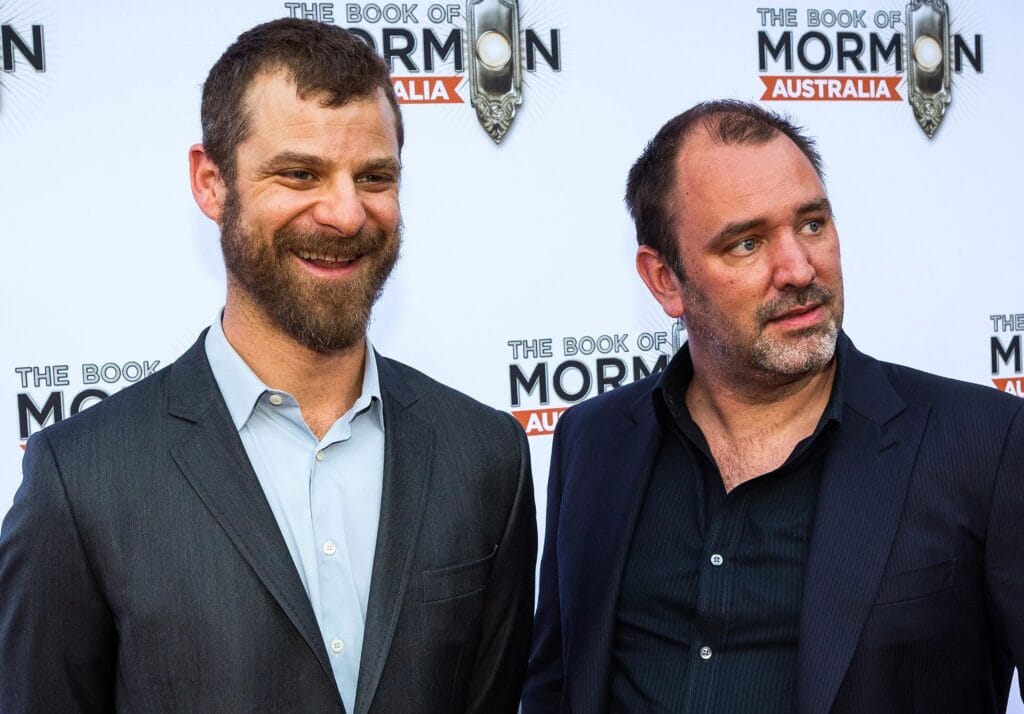
Trey Parker and Matt Stone are the undisputed financial heavyweights of the Top 5 Richest Voice Actors. While they provide the voices for almost every major character in South Park—from Stan and Kyle to Cartman and Butters—their wealth isn’t tied to a per-episode salary. Their genius lies in a “forgotten” 1997 contract clause that granted them a 50% share of all non-television revenue. This allowed them to bypass the studio system and claim half of every streaming deal, including a recent $900 million contract with Paramount+ and a subsequent $1.5 billion licensing agreement.
Their wealth mechanic is “total IP control.” Because they own half of the South Park digital universe, they aren’t just employees; they are partners with the network. This has allowed them to fund their own independent projects, such as the Broadway phenomenon The Book of Mormon, which has grossed over $1 billion in global ticket sales. They essentially use the high-velocity cash flow from their voice work to seed high-margin theatrical and film ventures, creating a self-sustaining cycle of billionaire-level liquidity.
Beyond the screen and stage, the duo has moved into “physical IP” through the acquisition and $40 million renovation of Casa Bonita, the iconic Colorado restaurant featured in their show. This move into the hospitality sector provides a tangible, high-appreciation asset that serves as a living museum for their brand. They also operate through their production company, Park County, which manages their various investments in tech and media. They are the first voice actors to ever reach billionaire status, redefining the ceiling for the entire industry.
Their strategy is built on “ruthless independence.” By refusing to sell their rights early on, they maintained the leverage to negotiate the largest deals in the history of cable television. They don’t just voice the characters; they own the world those characters inhabit. This “ownership-first” mentality is what keeps them at the pinnacle of the Top 5 Richest Voice Actors. They have successfully laundered crude humor into one of the most sophisticated and profitable media empires on the planet.
2. Matt Groening – Estimated Net Worth: $600 Million+
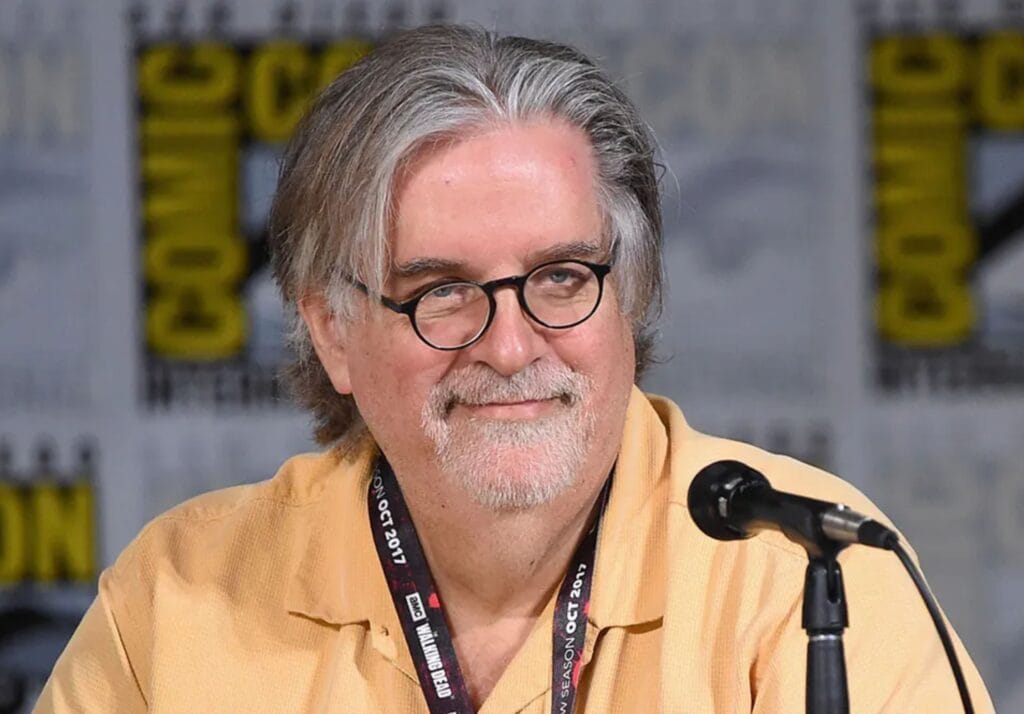
Matt Groening is the architect of the longest-running primetime series in history, but his place in the Top 5 Richest Voice Actors is solidified by his “character creation equity.” While he is primarily the creator of The Simpsons and Futurama, he provides various voices and “sound effects” (most famously Maggie Simpson’s pacifier suck) that secure his status as a performer. His wealth mechanic is “the syndication multiplier.” Every time an episode of The Simpsons airs in any country, in any language, Groening’s bank account grows.
The real scale of his wealth comes from the $12 billion franchise value of The Simpsons. Groening was a pioneer in “merchandising rights,” ensuring that he received a percentage of the billions of dollars generated by Bart Simpson t-shirts, toys, and theme park attractions. He transformed a simple animation style into a global retail index. By diversifying his portfolio with Futurama and the Netflix series Disenchantment, he has ensured that his “voice” and creative vision are represented across every major streaming and broadcast platform simultaneously.
Groening’s real estate holdings are equally massive, including multiple luxury estates in Malibu and Santa Monica. He treats his wealth with a “collector’s mindset,” investing in rare art and comic book history, further aligning his personal assets with his professional legacy. His business structure involves a complex web of licensing entities that manage the “likeness rights” of his characters, ensuring that even if he stopped working today, his estate would continue to generate nine-figure annual returns for decades.
The longevity of his brand is his greatest asset. Unlike creators who fade away, Groening has managed to keep The Simpsons culturally relevant for over 35 years. This “endurance premium” makes his IP more valuable than almost any other in the Top 5 Richest Voice Actors list. He has successfully navigated the transition from broadcast to digital, securing a massive payday when the Disney-Fox merger put his creations under the Disney umbrella. He is the ultimate example of how “creative fingerprints” can be converted into generational wealth.
3. Seth MacFarlane – Estimated Net Worth: $400 Million+
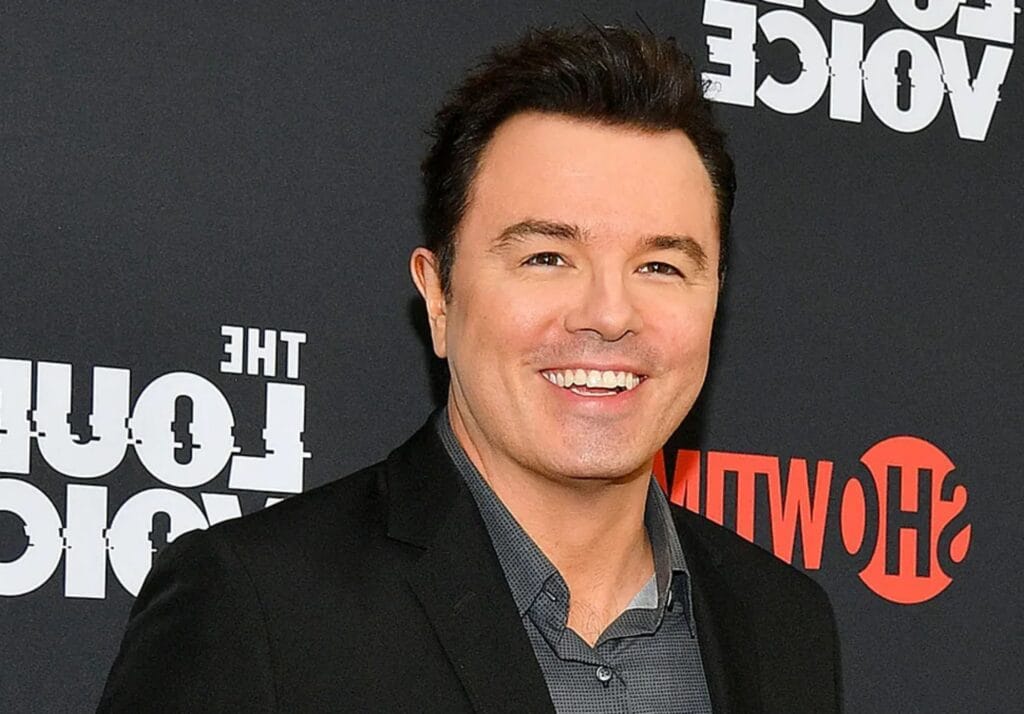
Seth MacFarlane is the most prolific vocal performer in the Top 5 Richest Voice Actors, famously voicing Peter, Stewie, and Brian Griffin, along with dozens of others. His wealth mechanic is “the overall studio deal.” In 2020, MacFarlane signed a $200 million deal with NBCUniversal, moving his production company, Fuzzy Door, away from his long-time home at Fox. This deal wasn’t just for his voice; it was for his “content-generating engine.” He is paid to think, write, and speak in the voices of characters that have become household names.
MacFarlane’s empire is built on “cross-platform dominance.” He leveraged the success of Family Guy to launch American Dad!, The Cleveland Show, and the Ted film franchise, which grossed over $500 million at the box office. By voicing the lead character in Ted, a CGI bear, he proved that he could carry a live-action blockbuster through vocal performance alone. This “digital lead” status allows him to command “A-list actor” salaries—often $50,000 to $100,000 per episode—on top of his massive backend producer points.
Beyond animation, MacFarlane has diversified into high-end music production and science-fiction drama with The Orville. He is an avid investor in “legacy media,” owning a massive collection of vintage Sinatra-era recordings and investing in his own big-band albums. This “prestige” branding allows him to maintain a high-end image that attracts premium advertisers and studio partners. His real estate portfolio includes a $13 million Beverly Hills mansion and a $15 million Malibu beachfront property, reflecting the high-liquidity nature of his “overall deal” income.
MacFarlane’s success in the Top 5 Richest Voice Actors is a result of his “vertical integration.” He is the writer, the director, the producer, and the star of his shows. By removing the need to hire expensive outside talent for his lead roles, he keeps the “labor costs” of his productions low while keeping the “equity” for himself. He has mastered the art of being a “one-man studio,” making him one of the most efficient wealth-builders in the history of Hollywood.
4. Hank Azaria – Estimated Net Worth: $90 Million+
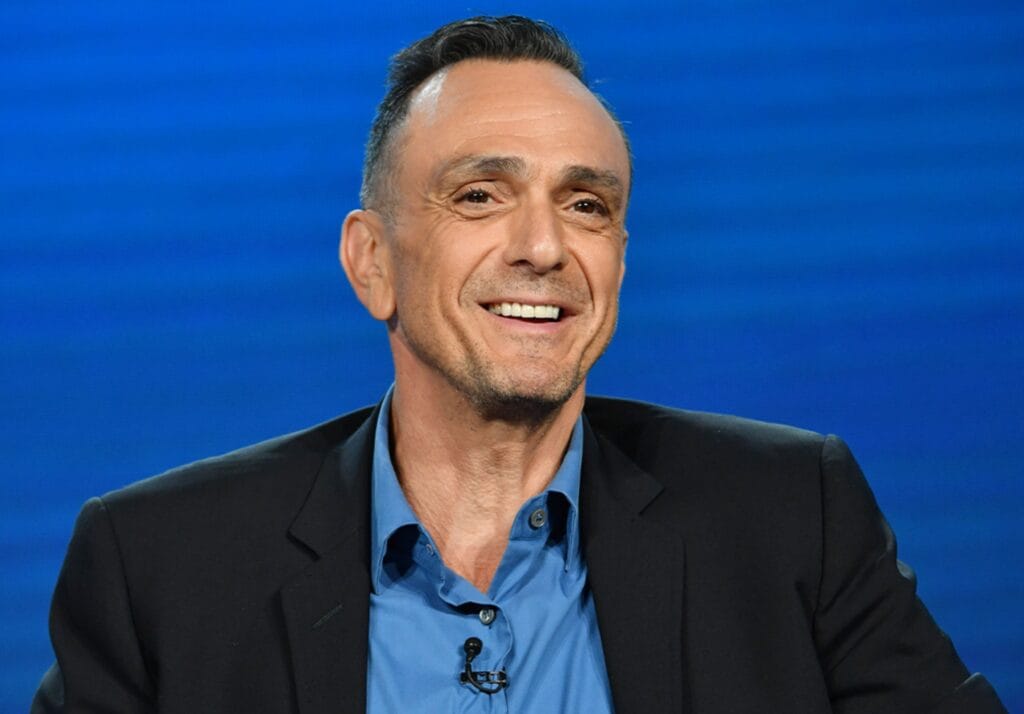
Hank Azaria is the “purest” voice actor on this list, having built a $90 million fortune primarily through his legendary work on The Simpsons. While he doesn’t own the show like Groening, he has mastered the “high-yield contract negotiation.” At the peak of the show’s power, Azaria and his fellow cast members were earning $400,000 per episode. For a 22-episode season, that is a $8.8 million “base salary” for a job that requires no hair, makeup, or travel. This “high-margin labor” is the secret to his longevity in the Top 5 Richest Voice Actors.
Azaria’s wealth mechanic is “diversified talent allocation.” He used his Simpsons capital to build a successful live-action career in films like The Birdcage and Godzilla, and series like Brockmire. By maintaining a presence in both the vocal and physical acting worlds, he has “doubled” his earning potential. He also earns significant residuals from his work on Friends, where his recurring role as “Phoebe’s scientist boyfriend” remains a staple of global syndication. He has essentially built a “royalty-driven” life.
His business ventures include a deep involvement in “charitable venture capital,” focusing on educational and social initiatives through his “Determined to Succeed” program. While he is more conservative with his public investments than the “franchise owners” above, his real estate portfolio is top-tier, featuring luxury properties in New York and Bel Air. He treats his voice acting income as a “stable bond” that allows him to take creative risks in independent theater and film, ensuring he never has to work for a paycheck he doesn’t believe in.
Azaria’s place in the Top 5 Richest Voice Actors is a testament to the power of “vocal range.” By voicing dozens of characters—Moe, Chief Wiggum, Comic Book Guy—he became indispensable to the world’s most profitable show. This “indispensability” provided him with the leverage to demand equity-like salaries for decades. He is the ultimate “blue-collar” voice acting billionaire-in-the-making, proving that if you provide enough value to a franchise, you can build a massive empire without owning the copyright.
5. Nancy Cartwright – Estimated Net Worth: $80 Million+
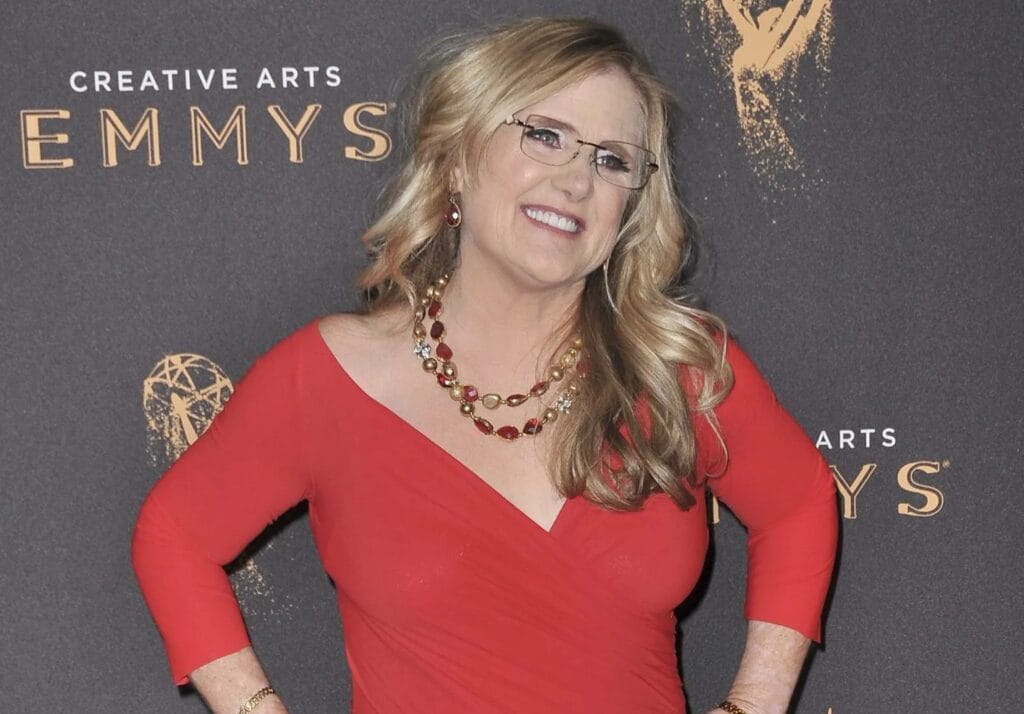
Nancy Cartwright, the voice of Bart Simpson, is the highest-paid female voice actor in the world and a cornerstone of the Top 5 Richest Voice Actors. Like Azaria, she benefited from the massive “Simpsons salary” spikes, banking hundreds of millions of dollars over her 35-year tenure. But Cartwright’s real wealth mechanic is “brand extension.” She has used her status as “the voice of a generation” to launch a successful production company, Spotted Cow Entertainment, and a lucrative public speaking career.
Cartwright is a master of “niche monetization.” She understands that being the voice of Bart Simpson makes her a “living legend” in the eyes of fans and corporate sponsors. She earns significant fees for public appearances, autographs, and personal brand partnerships. She also has a significant portfolio of “vocal IP” beyond The Simpsons, including roles in Rugrats and Kim Possible, ensuring that her “mailbox money” comes from multiple studio sources. She has turned her unique vocal chords into a permanent, income-generating asset.
Her wealth is also heavily influenced by her high-level involvement in the Church of Scientology, where she is one of the most significant donors. This involvement speaks to the “high-liquidity” nature of her wealth; she is able to make eight-figure contributions while maintaining a lavish lifestyle and a diverse investment portfolio. Her real estate holdings include a massive estate in Northridge and several investment properties that provide a steady stream of rental income. She views her wealth as a tool for “impact,” whether through her creative projects or her personal beliefs.
The core of her success in the Top 5 Richest Voice Actors is her “pioneer status.” As the first woman to dominate the male-centric world of “boy voices” in animation, she carved out a market that she still owns today. By maintaining the same “voice” for over three decades, she has created a “fixed asset” that the network cannot replace. This “job security” is unheard of in Hollywood, and it has allowed her to compound her wealth in a way that very few actors—voice or otherwise—ever will.
Conclusion on Top 5 Richest Voice Actors
The financial reality of the Top 5 Richest Voice Actors proves that the industry has shifted from “hired help” to “franchise owners.” Whether it is Trey Parker and Matt Stone leveraging a 25-year-old contract clause into a multi-billion dollar empire, or Seth MacFarlane using his vocal range to command a $200 million studio deal, the message is clear: ownership is the only path to elite wealth. These individuals have shown that the “voice” is merely the entry point to a much larger game of IP licensing, syndication residuals, and global brand management.
Ultimately, the Top 5 Richest Voice Actors serve as a masterclass in “niche dominance.” By becoming the literal voices of global cultural icons, they have secured a level of financial stability and liquidity that is rare in the volatile world of entertainment. As the “streaming wars” continue to drive up the value of established IP, the net worth of these vocal titans will only continue to climb. They aren’t just reading lines; they are managing some of the Richest men in the history of media.